

In this article: Understand S-Track vs L-Track vs SL-Track massage chairs by where each track reaches, how it follows your spine and hips, and how to choose the right feel for your height and daily routine.
- What Massage Chair "Track" Means (In Plain English)
- S-Track Massage Chairs: Best For Spine-First Coverage
- L-Track Massage Chairs: Best For Glutes & Seat Coverage
- SL-Track Massage Chairs: The Most Complete Coverage Path
- S-Track vs L-Track vs SL-Track: Side-by-Side Comparison
- How to Choose the Right Track (Simple Checklist)
- Common Myths About Track Types
- Frequently Asked Questions
S-Track vs L-Track massage chair (and SL-Track) differences come down to coverage and body-fit logic: S-Track follows your spine's natural "S" curve for close back contact, L-Track extends under the glutes and thighs for longer reach, and SL-Track blends both for the most continuous path from neck to seat.

If you're shopping premium wellness chairs, track design is one of the few features that changes the entire feel of a session. It affects where rollers can travel, how naturally they contour to your back, and whether you'll get meaningful attention in the hips and glute area—especially important for people who sit a lot.
Quick Takeaways
• Choose S-Track if you want the closest contour along the spine and a "hugging" back massage feel.
• Choose L-Track if glutes, hips, and upper hamstrings are high-priority areas in your daily routine.
• Choose SL-Track if you want the most continuous coverage from neck through the seat with a more uniform transition.
• Height and torso length matter: taller users often appreciate the longer travel of L/SL tracks, while shorter users often love S-Track's precise spine fit.
• Track type doesn't replace adjustability: body scan, roller width, intensity controls, and recline angle still determine comfort.
1. What Massage Chair "Track" Means (In Plain English)
A massage chair "track" is the guided path the roller mechanism rides on. Think of it as rails that determine where the rollers can physically travel and how closely they can maintain contact with your body.
Track type is different from roller technology (2D/3D/4D). Rollers describe how the massage moves and adjusts intensity; the track describes where that massage can go.
• S-Track: designed to match the natural curve of the spine from neck to lower back.
• L-Track: extends the roller path further down into the seat to reach glutes and sometimes upper thighs.
• SL-Track: combines S-curve contouring with L-style extension for a continuous path.
If you're also comparing roller depth and "realism," you may want to read 2D vs 3D vs 4D Massage Chairs: What's the Difference?
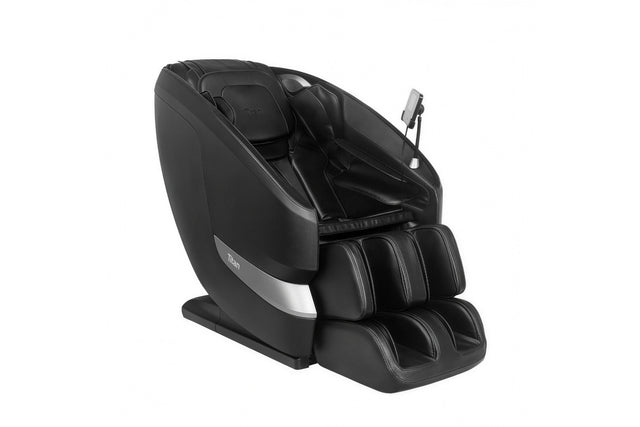
2. S-Track Massage Chairs: Best For Spine-First Coverage
S-Track massage chairs are built around the spine's natural shape—curving inward at the neck, outward at the upper back, and inward again at the lower back. This design helps the rollers maintain consistent contact across the back, especially through the lumbar area.
What S-Track feels like
• Closer, more contoured contact along the mid-back and lower back.
• More "precision" on the spine (great if you want shoulder blade work and lumbar attention).
• A defined stop point near the tailbone area—less emphasis on glutes compared to L/SL tracks.
Who S-Track is best for
• People who primarily want neck-to-lower-back coverage.
• Users who dislike a massage that "travels into the seat" and prefer a more traditional back-focused session.
• Many short-to-average height users who value consistent roller contact rather than longer reach.
When S-Track may not be enough
If your tension lives in the glutes, hips, or upper hamstrings—common for desk work, driving, or training—an S-Track can still feel excellent, but it may leave those lower zones under-served compared to L-Track or SL-Track.
3. L-Track Massage Chairs: Best For Glutes & Seat Coverage
L-Track massage chairs extend the roller track from the upper back down through the lower back and into the seat. This changes the character of the massage: you get a longer travel path and more emphasis on the hips and glutes.
What L-Track feels like
• Longer roller travel, often from neck to glutes (and sometimes to upper thighs).
• More attention in the seat, which can feel restorative after long periods of sitting.
• A "stretching" sense of coverage as the rollers transition from lumbar into glute muscles.
Who L-Track is best for
• People who want glute and hip coverage as a priority.
• Users who sit for extended periods and want a chair that can help ease pressure and tension through the lower body.
• Taller users or anyone who frequently finds standard back massage travel "too short."
One nuance to know
Because L-Track is built for extension, the "spine-hugging" contour of the upper back can vary by model. Many premium designs manage this well, but the key point is: L-Track prioritizes range, while S-Track prioritizes spinal contour precision.
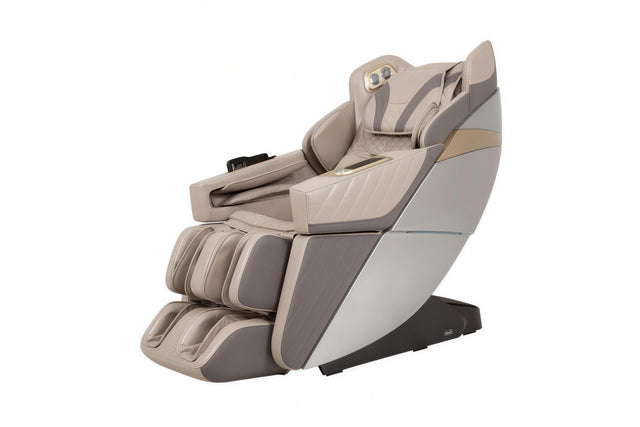
4. SL-Track Massage Chairs: The Most Complete Coverage Path
SL-Track massage chairs combine both design intents: the track follows the spine's natural S-curve and extends into the seat like an L-Track. The goal is simple: continuous, body-following coverage from neck through glutes (and sometimes upper thighs) without losing the close contouring people love in S-Track designs.
What SL-Track feels like
• Seamless transition from upper back into lumbar and down into the seat.
• Balanced "whole-back plus seat" sessions, especially when paired with body scan and adjustable intensity.
• More consistent contact across curves, depending on model engineering and padding design.
Who SL-Track is best for
• Households sharing a chair across different heights and preferences.
• Buyers who want a premium, all-around track and don't want to second-guess coverage zones.
• Anyone who wants both spine contour and glute work as part of a daily reset routine.
If you're building a full at-home routine, pairing track coverage with recline can change how a massage feels. See What Is Zero Gravity in a Massage Chair? for how positioning reduces pressure and supports deeper relaxation.
5. S-Track vs L-Track vs SL-Track: Side-by-Side Comparison
| Feature | S-Track | L-Track | SL-Track |
|---|---|---|---|
| Primary design goal | Follow spine curvature closely | Extend coverage into seat | Combine spinal contour + extended reach |
| Typical roller coverage | Neck to lower back | Neck to glutes (sometimes upper thighs) | Neck to glutes (sometimes upper thighs) with S-curve contour |
| Best for focus areas | Upper back, shoulder blades, lumbar | Lower back, hips, glutes | Full back + hips/glutes |
| "Hugging the spine" feel | Often strongest | Varies by model | Often strong + more continuous coverage |
| Good for taller users | Can be (model-dependent) | Often yes (more travel length) | Often yes (more travel + contour) |
| Good for mixed-height households | Good with strong adjustability | Good with strong adjustability | Often the safest "one-chair-for-everyone" choice |
6. How to Choose the Right Track (Simple Checklist)
Use this quick checklist to choose your track based on height, preferred focus areas, and daily routine. The goal is to match the chair to how you actually recover—not how a spec sheet reads.
Start with your top two "must-feel" zones
• If your priority is mid-back and lumbar: start with S-Track or SL-Track.
• If your priority is glutes and hips: start with L-Track or SL-Track.
Consider your height and torso length
• Taller users: often prefer L-Track or SL-Track for longer travel and better seat reach.
• Shorter users: often love S-Track for precise contour and consistent contact (as long as glute coverage isn't a must).
Match the track to your routine (not just your curiosity)
• 10–15 minutes daily for stress relief: S-Track or SL-Track can feel beautifully centered on the back.
• After workouts or long desk days: L-Track or SL-Track often feels more complete because it addresses hips and glutes.
• Shared chair for multiple users: SL-Track tends to satisfy the widest range of preferences.
Don't overlook the features that make any track feel better
Track type is the "where," but comfort depends on the "how." Prioritize:
• Body scan for accurate roller placement
• Adjustable roller width (especially for shoulder blades)
• Intensity controls you can fine-tune day to day
• Recline and Zero Gravity to reduce pressure and allow deeper relaxation
• Airbag placement for arms, calves, and feet (complements roller work)
For a broader feature lens, see Airbag Massage vs Roller Massage: What Each One Actually Does.
If you're ready to browse premium options, explore our Wellness Series to compare designs built for restorative, at-home comfort.
7. Common Myths About Track Types
Myth: "SL-Track is always better than S-Track."
Reality: SL-Track is often the most complete coverage path, but "better" depends on what you want to feel. If you care most about a spine-hugging back massage and don't need glute coverage, an excellent S-Track chair can feel more focused and satisfying.
Myth: "L-Track means the chair massages your entire legs."
Reality: L-Track primarily extends the roller path into the seat (glutes and sometimes upper thighs). Calves and feet are typically handled by airbags and dedicated foot rollers, not the main back roller track.
Myth: "Track type matters more than everything else."
Reality: Track type is foundational, but the final experience depends on roller technology, padding design, body scan accuracy, and adjustability. A well-tuned chair with the "right" controls can outperform a spec-heavy chair that doesn't fit your body.
Frequently Asked Questions
What's the main difference between an S-Track and L-Track massage chair?
S-Track focuses on matching the spine's natural curve for close back contact from neck to lower back. L-Track extends the roller path beyond the lumbar area into the seat, reaching the glutes and sometimes the upper thighs. The practical difference is where you feel the most coverage: back-focused for S-Track, back-plus-seat for L-Track.
Is SL-Track the same as S-Track?
No. SL-Track combines S-curve contouring with L-style extension, creating a continuous path from neck through the lower back and into the seat. S-Track focuses on spinal contour only and does not extend into the seat area. The "SL" designation means the chair delivers both benefits in one track design.
Which track is best for lower back tension?
S-Track and SL-Track are often preferred for a close, contoured feel through the lumbar area. However, if your lower back discomfort is tied to tight hips and glutes, L-Track or SL-Track can feel more complete because it reaches lower into the seat. In practice, the best track for lower back tension depends on where your tension actually originates.
Which track is best if I sit all day?
L-Track or SL-Track is usually the better match for all-day sitting because the roller path can reach glutes and hip muscles—areas that often feel compressed or tight after long periods in a chair. If your tension sits mostly in the mid and upper back, S-Track can also work well, but it won't address the seat-area tension that builds from prolonged sitting.
Do taller people need L-Track or SL-Track?
Not always, but taller users often prefer L-Track or SL-Track because the longer travel path can feel more proportional and reach their full lumbar-to-seat coverage. The best choice still depends on the chair's adjustability and how well it fits your torso and shoulder position. Always compare recommended user height ranges when evaluating a specific model.
What should I compare after choosing a track type?
After track type, compare roller technology (2D/3D/4D), body scan accuracy, intensity control range, recline and Zero Gravity options, airbag coverage zones, and how much space the chair needs when fully reclining. A great next step is How to Choose a Massage Chair for Your Home.
Can a chair have good coverage without SL-Track?
Yes. An S-Track chair with strong adjustability, accurate body scanning, and a well-tuned roller mechanism can feel more satisfying than an SL-Track chair that doesn't fit your body well. Track type establishes the coverage path, but the overall experience also depends on padding, roller quality, and how precisely the chair conforms to your specific build.


