

In this article: If you're wondering how to choose a massage chair for your home, this framework helps you match the right chair to your body, your goals, your space, and the kind of long-term ownership you'll actually enjoy.
- Start With Your Daily Goal (Relaxation, Recovery, or Both)
- Make Sure the Chair Fits Your Body (Not Just Your Room)
- Choose a Massage System: Rollers, Tracks, and Intensity Control
- Comfort & Materials: What You'll Feel Every Day
- Controls, Programs, and Shared Use
- Space, Power, and Setup Considerations
- Long-Term Ownership: Noise, Maintenance, Warranty, and Service
- How to Compare Chairs Quickly (A Simple Checklist)
- Frequently Asked Questions
The best way to choose a massage chair for your home is to start with your daily goal (relaxation, recovery, or both), then confirm body fit and coverage (neck-to-glutes), and only then compare features like track type, roller style, airbags, and controls. A chair that fits your body and routine will feel more natural, more comfortable, and easier to use consistently.

If you're shopping in Canada and building a calmer home wellness routine, it helps to think of a massage chair less like a gadget and more like a piece of daily-use comfort furniture—one that needs the right "fit," the right feel, and reliable ownership over time.
Quick Takeaways
• Choose your chair around your primary goal: gentle daily decompression, athletic recovery, or a balanced mix.
• Body fit matters as much as features—look for strong shoulder/neck alignment, calf/foot comfort, and adjustability for multiple users.
• Coverage is a system: track type, roller mechanism, airbags, and recline positioning all shape what you feel.
• Prioritize controls you'll actually use—simple programs, clear intensity changes, and easy adjustments beat long feature lists.
• Plan for long-term ownership: space requirements, noise level, upholstery care, warranty, and local support.
1. Start With Your Daily Goal (Relaxation, Recovery, or Both)
Before you compare specifications, define what "better" feels like in your day-to-day life. The right massage chair should support a repeatable routine—five to twenty minutes that fits naturally into your schedule.
Goal 1: Deep relaxation and stress reset
If your priority is unwinding, focus on a chair that feels calm and consistent: smooth roller movement, comfortable recline, and gentle air compression. You'll likely use slower, longer sessions and prefer quieter operation.
Goal 2: Recovery and tension relief
If you carry tension in specific areas (upper back, lower back, hips, calves), look for strong coverage and control—especially intensity adjustments and targeted programs. The "best" chair here is the one that can be precise without feeling harsh.
Goal 3: A shared chair for multiple people
In shared households, adjustability becomes a feature that matters every single day. Prioritize easy user switching, consistent body scanning, and controls that don't require a manual.
When you're ready to browse options, start with the Valencia Wellness Series to compare models designed for premium home comfort and daily use.
2. Make Sure the Chair Fits Your Body (Not Just Your Room)
"Fit" is the most overlooked factor in how to choose a massage chair—and one of the biggest reasons people feel underwhelmed after delivery. A chair can have impressive features and still feel off if roller alignment misses your shoulders or the legrest doesn't sit comfortably.

Key fit checks to do (ideally before buying)
• Shoulder and neck alignment: The rollers should reach the upper back naturally, without forcing you to slouch or brace.
• Lower back contact: You should feel consistent support through the lumbar area, not a "gap" that breaks the massage.
• Seat width and hip comfort: A chair that feels narrow or firm in the seat will reduce how often you use it.
• Calf and foot comfort: If the leg/foot section feels cramped, it becomes the reason sessions end early.
Look for adjustability that improves real comfort
• Automatic body scanning: Helps place rollers closer to where your body actually is (especially important if multiple people use the chair).
• Legrest extension: Useful for taller users so the calf/foot massage lands correctly.
• Intensity range: A wide intensity range helps the same chair work for both gentle relaxation and deeper pressure days.
3. Choose a Massage System: Rollers, Tracks, and Intensity Control
The "massage system" is the core of what you feel. When comparing chairs, it helps to break it into four parts: roller mechanism, track type, airbags, and positioning.
Roller mechanism: 2D vs 3D vs 4D
Rollers create the kneading, tapping, and gliding sensations along your back. The difference between 2D, 3D, and 4D is mainly how the chair controls depth and movement over time.
• 2D: Moves up/down and side-to-side. Often feels consistent and gentle, with limited depth control.
• 3D: Adds in/out depth so you can adjust pressure more precisely.
• 4D: Adds speed and rhythm variation to make movement feel more "human-like," often with more nuanced control.
To go deeper on this, see 2D vs 3D vs 4D Massage Chairs: What's the Difference?
Track type: where the rollers can travel
The track is the "path" the rollers follow. It largely determines how much of your back—and potentially your glutes—the chair can cover.
• S-Track: Follows the natural curve of your spine (good for back contour support).
• L-Track: Extends coverage farther down toward the seat and glutes.
• SL-Track: Combines spinal contour support with extended lower coverage.
Learn the practical differences here: S-Track vs L-Track vs SL-Track Massage Chairs

Airbag massage vs roller massage
Airbags provide compression—often around shoulders, arms, hips, calves, and feet. Rollers provide mechanical pressure along the back. Most premium chairs use both, but they feel very different.
• Airbags: Gentle, enveloping compression that can feel calming and supportive.
• Rollers: More targeted "hands-on" pressure along muscle lines.
For a clearer breakdown, see Airbag Massage vs Roller Massage: What Each One Actually Does
Zero Gravity positioning (why it changes the feel)
Zero Gravity is a reclined position designed to distribute weight more evenly and reduce pressure on the spine. In practice, it can make roller pressure feel smoother and help the chair feel more "weightless," which many people prefer for longer sessions.
More detail: What Is Zero Gravity in a Massage Chair?
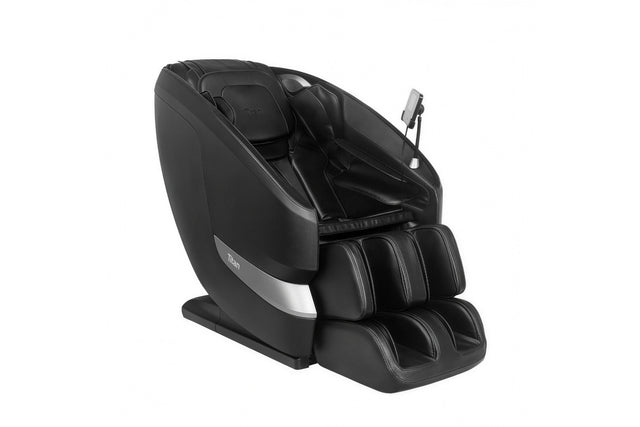
4. Comfort & Materials: What You'll Feel Every Day
Because a massage chair is also a piece of furniture, comfort details matter: cushioning, upholstery, temperature, and how the chair supports you when you're not running an intense program.
Upholstery and touchpoints
• Feel: Choose an upholstery that feels comfortable against skin and doesn't feel "sticky" over time.
• Durability: If the chair sits in a sunny room or high-use space, prioritize materials designed to handle daily contact.
• Cleaning: Look for surfaces that wipe clean easily—especially in shared households.
Heat and warmth features
Gentle warming features can support comfort and help you settle into a session. If you're sensitive to heat, prioritize a chair with clear temperature control and easy on/off access from the remote.
5. Controls, Programs, and Shared Use
Most people use a small set of favorites. The best controls are the ones you'll actually reach for when you're tired.
What to prioritize in a remote or control panel
• Clear program names: "Relax," "Recovery," "Stretch," and targeted zones are easier to return to than vague labels.
• Fast adjustments: You should be able to change intensity, roller width, and airbags in a few seconds.
• Memory settings: Helpful if two or more people share the chair.
Stretch programs: great when they're gentle and well-tuned
Stretching routines can feel restorative when they're smooth and controlled. If you know you're sensitive to strong compression, look for programs that allow you to reduce intensity or skip certain steps.
6. Space, Power, and Setup Considerations
Even a perfect chair can become stressful if it overwhelms your room. Plan the physical setup early so your chair feels like a natural part of the home.
How much space does a massage chair need?
Space needs depend on the chair's recline and sliding mechanism. As a baseline, plan for enough clearance behind and in front of the chair to recline fully and extend the legrest comfortably, plus room to walk around it.
Use this guide to plan accurately: How Much Space Does a Massage Chair Need?
Power and placement
• Outlet access: Choose a spot where cords won't cross walkways.
• Floor protection: Consider a mat or protective layer if placing on hardwood or delicate flooring.
• Noise considerations: If your space is open concept, quieter operation becomes more valuable.
7. Long-Term Ownership: Noise, Maintenance, Warranty, and Service
A premium massage chair should feel reassuring to own—not finicky. When comparing options, think beyond day one.
Questions to ask before you buy
• What does routine cleaning look like? Upholstery care should be simple and realistic.
• How loud is the chair in typical use? Roller movement, air pumps, and recline motors can vary by model.
• What's included in warranty coverage? Confirm what's covered and for how long.
• What does service look like in Canada? Clarity here matters as much as features.
Budgeting with "cost per session" in mind
Massage chairs span a wide range of pricing. One practical way to evaluate value is to estimate how often you'll use it. A chair you genuinely enjoy using daily often becomes the best long-term choice—even if it wasn't the cheapest option upfront.
8. How to Compare Chairs Quickly (A Simple Checklist)
If you're narrowing down options, use this quick comparison table to keep the decision calm and straightforward.
| Decision Factor | What to Look For | Why It Matters |
|---|---|---|
| Daily goal | Relaxation, recovery, or balanced programs | Determines what you'll use most, not what looks impressive |
| Body fit | Body scan, leg extension, shoulder alignment | Improves comfort and roller placement for consistent sessions |
| Coverage | Track type (S/L/SL) and roller travel length | Shapes whether you feel full back-to-seat coverage or mostly upper back |
| Intensity control | Wide range, easy adjustments | Helps one chair work across gentle and deeper days |
| Airbags | Shoulders/arms/hips/calves/feet, adjustable levels | Adds calming compression and improves full-body feel |
| Recline / Zero Gravity | Comfortable recline angles, stable feel | Can reduce pressure and deepen relaxation during longer sessions |
| Controls | Simple interface, favorites/memory | More usage comes from ease, not complexity |
| Space planning | Recline clearance, walkway room | Prevents buyer's remorse after delivery |
| Ownership | Warranty clarity, service availability, durability | Protects your investment and keeps the experience effortless |
If you'd like to compare models with these criteria in mind, explore the Wellness Series collection and shortlist a few chairs that match your goal and coverage preferences.
Frequently Asked Questions
How do I know what massage chair intensity is right for me?
The right intensity is one that feels effective without making you brace or tense up. Choose a chair with a wide range of intensity settings so you can keep sessions gentle for daily use and increase pressure only when you want deeper work. Starting at a lower setting and adjusting over a few sessions is the most reliable way to find your comfortable range.
Is a 3D or 4D massage chair always better than 2D?
No—3D and 4D can offer more depth control and a more nuanced feel, but "better" depends on comfort preferences. If you want gentle, predictable sessions, a well-tuned 2D chair can still feel excellent. If you want more precise pressure control or a massage that adjusts to your breathing and rhythm, 3D or 4D is often worth considering.
What's the most important feature when choosing a massage chair for home?
Body fit and coverage are usually the most important. If the rollers don't align to your shoulders and spine—or the leg/foot section doesn't fit comfortably—extra features won't matter because you won't use the chair as often. Start with fit, then compare coverage (track type), then consider features like roller depth and airbag zones.
Do I need Zero Gravity in a massage chair?
You don't need it, but many people prefer it. Zero Gravity positioning can make the massage feel smoother by distributing body weight more evenly and helping you relax into the rollers. It also tends to make longer sessions more comfortable and reduces the sense of pressure building in the lower back.
How much space should I plan around the chair?
Plan for full recline clearance and legrest extension, plus space to walk comfortably around the chair on all sides. Exact requirements vary by model, so it's best to measure your intended location and compare it to the chair's recommended clearance guidelines. Space-saving or wall-hugging designs can help if your room is smaller.
Should I buy a massage chair online or try it in person?
Trying a chair in person is always valuable, especially for confirming shoulder alignment and legrest fit. However, detailed comparison guides, clear specification sheets, and a generous return or trial policy can make online purchases work well too. Prioritize brands that provide accurate height and weight ranges, detailed fit guidance, and responsive customer support.
How long do massage chairs typically last?
Premium massage chairs are generally built for years of daily use when properly maintained. Longevity depends on build quality, how often the chair is used, upholstery care, and the reliability of mechanical components. A clear warranty from a manufacturer who offers Canadian service support is one of the most practical indicators of long-term ownership confidence.
What's the difference between a massage chair and a zero gravity recliner?
A massage chair includes an active roller and/or airbag mechanism that performs massage functions. A zero gravity recliner provides a specific recline angle for comfort and pressure distribution but typically does not include a motorized massage mechanism. Some premium chairs combine both—offering zero gravity positioning alongside a full roller and airbag system.


