

In this article: How the roller dimensions in 2D, 3D, and 4D massage chairs determine pressure depth, rhythm control, and overall comfort — so you can match the right chair to your body and routine.
- What "2D, 3D, and 4D" Really Mean
- 2D Massage Chairs: Simple, Consistent Roller Pressure
- 3D Massage Chairs: Adjustable Depth for More Personalized Pressure
- 4D Massage Chairs: Depth Plus Speed & Rhythm Control
- Side-by-Side Comparison Table
- Which One Should You Choose for Your Body & Routine?
- What Matters as Much as "D": Track, Body Scan, and Airbags
- Frequently Asked Questions
The difference between a 2D vs 3D vs 4D massage chair is how the rollers move and adapt: 2D changes position (up/down and left/right), 3D adds adjustable depth (in/out pressure), and 4D adds more control over speed, rhythm, and responsiveness so the massage can feel more fluid and human-like. These dimensions describe the roller mechanism, not the number of techniques — and understanding this one spec makes it much easier to predict whether a chair will suit your body and how you plan to use it.

If you're comparing options in the Valencia Wellness Series or evaluating chairs with heat and massage features, this guide breaks down each dimension, shows you a comparison table, and ends with a practical decision framework — so you leave knowing exactly which type fits your routine.
Quick Takeaways
• 2D rollers move in two directions — predictable and consistent.
Up/down and left/right only; pressure is fixed by design, making 2D ideal for lighter or straightforward massage sessions.
• 3D adds in-and-out depth — the most practical upgrade for most buyers.
You can dial pressure up or down to suit different body types and tension levels, making it the most balanced choice for shared use.
• 4D layers speed and rhythm control on top of 3D depth.
The rollers can slow over tight spots and accelerate between them, creating a more natural pacing — though "4D" varies by brand, so verify what controls are actually included.
• The "D" level is not the only spec that matters.
Track design (S/L/SL), body scanning accuracy, and airbag placement influence comfort and coverage just as much as how many dimensions the rollers use.
• Best choice depends on sensitivity, frequency, and whether multiple people share the chair.
Light users can get excellent results from 2D; frequent users or households with varied builds often benefit most from 3D or 4D.
1. What "2D, 3D, and 4D" Really Mean

When brands describe massage chairs as 2D, 3D, or 4D, they're referring to the roller carriage — the mechanism that travels along the chair's internal track to work along your back. Each "D" adds a layer of movement or control:
• 2D: Rollers move up/down and left/right along the track — two planes of movement, consistent depth.
• 3D: Adds a third axis — in/out — so rollers can press deeper into the muscle or pull back for a lighter touch.
• 4D: Builds on 3D by adding control over speed, pacing, and transitions — how quickly and smoothly the roller depth changes during a stroke.
One important caveat: "4D" is not a single industry standard. One brand's 4D may emphasize variable speed; another focuses on smoother depth transitions or a wider pressure range. This is why it's worth translating any label into what you'll actually feel: how deep can the rollers go, how smoothly does the intensity shift, and how much control do you have over the session? If you're also exploring how these features compare to a dedicated massage recliner for everyday home use, that comparison can help narrow your shortlist quickly.
2. 2D Massage Chairs: Simple, Consistent Roller Pressure

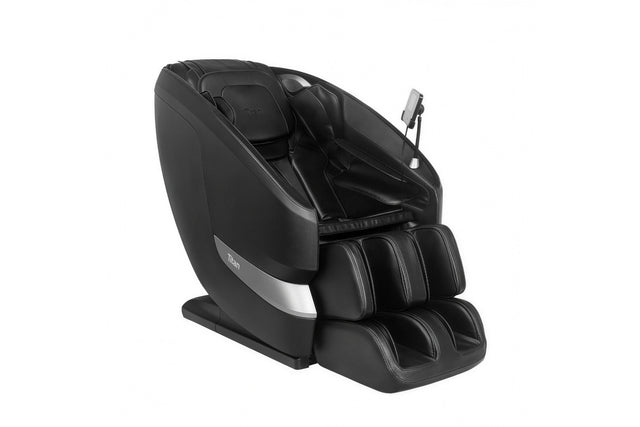
A 2D massage chair uses rollers that travel along the back track and shift side-to-side to follow the spine. Because there's no in-and-out adjustment, the pressure stays consistent throughout the session — determined by roller size, padding, and preset programs rather than user adjustment.
How 2D feels in practice
• Steady contact: The rollers maintain a fixed reach into your back throughout the session — no pressure spikes or surprises.
• Predictable intensity: If you prefer a lighter massage, 2D provides a comfortable, easy-to-settle-into experience without complex settings.
• Limited customization: You can't target deeper pressure in one area and lighter pressure in another — the depth is set by the chair's design.
Who 2D is best for
• People who prefer a gentle to moderate massage and don't want aggressive or deep pressure.
• Those who want simple presets without spending time adjusting settings before each session.
• Homes where the chair is used occasionally for general relaxation rather than targeted muscle relief.
3. 3D Massage Chairs: Adjustable Depth for More Personalized Pressure
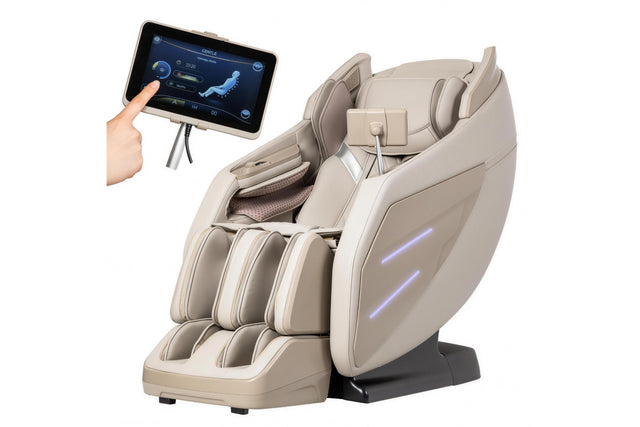
A 3D massage chair adds a third axis: the rollers can move in and out, changing how deeply they press into your back. This is usually the turning point where a chair begins to feel truly tailored — because you can adjust intensity beyond simply changing the speed of a preset program. For households evaluating the full range of heat and massage recliner options, 3D is often the most practical middle ground.
How 3D feels in practice
• Depth control: You can increase or decrease how much pressure the rollers apply — from a light surface massage to a noticeably deeper reach into the muscle.
• Better contour matching: A 3D mechanism adapts more effectively to broad shoulders, pronounced spinal curvature, or areas with more muscle density.
• More targeted sessions: When combined with a body scan, 3D helps maintain roller contact where you actually need it rather than where the track assumes you do.
Who 3D is best for
• Anyone who wants customizable pressure for daily use — being able to dial intensity up after a workout or down when muscles are already tender.
• Households with multiple users of different heights, builds, and pressure preferences.
• People who want a chair that can feel gentle one day and deeper the next without buying two separate chairs.
4. 4D Massage Chairs: Depth Plus Speed & Rhythm Control

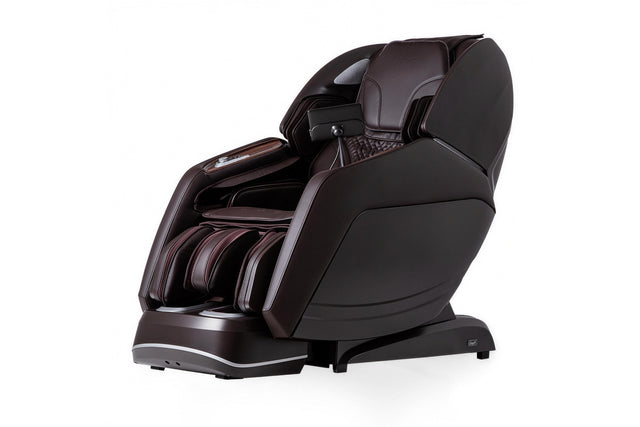
A 4D massage chair builds on 3D by adding finer control over speed, pacing, and transitions — so the massage doesn't just press deeper, it can also vary how quickly and smoothly it moves in different parts of a stroke. This is where a chair begins to feel less mechanical and more like a trained hand that adjusts in real time. If you're evaluating whether these features are worth the premium compared to standard heat vs. massage chair options, 4D tends to justify the cost most for frequent daily users.
How 4D feels in practice
• More natural pacing: Rollers can slow down over tight spots and speed up between them depending on the program — mimicking the way a therapist adjusts tempo.
• Smoother transitions: Changes in pressure and movement feel less abrupt, which matters most during longer sessions where jarring shifts break the relaxation response.
• Greater personalization: More settings means you're more likely to find a combination that matches your comfort threshold precisely — especially if you're particular about rhythm.
Who 4D is best for
• People who want the most human-like movement available in premium wellness seating.
• Those who use their chair daily or near-daily as part of a structured home wellness routine.
• Buyers who care about responsiveness and nuance as much as raw intensity — and who will actually explore the chair's settings rather than leaving it on the default program.
5. Side-by-Side Comparison Table
| Feature | 2D Massage Chair | 3D Massage Chair | 4D Massage Chair |
|---|---|---|---|
| Roller movement | Up/down, left/right | Up/down, left/right, in/out | 3D movement + enhanced speed/rhythm control |
| Pressure customization | Limited | High (adjustable depth) | Very high (depth + pacing nuance) |
| Human-like feel | Basic to moderate | More realistic due to depth changes | Most realistic — depth + variable rhythm |
| Best for | Light, consistent relaxation | Shared use, personalized comfort | Premium, nuanced sessions and frequent use |
| Key things to verify | Padding, track type, roller size | Depth range, body scan quality | Which speed/rhythm controls are actually included |
6. Which One Should You Choose for Your Body & Routine?

Matching the "D level" to your sensitivity, preferred intensity, and usage habits is the most practical way to decide. Here's how to think through it without over-engineering the decision.
Choose 2D for straightforward comfort
• You prefer a lighter touch and don't want aggressive or deep pressure on tense muscles.
• You'll use the chair for short, relaxing sessions — unwinding after work rather than targeting specific muscle groups.
• Your priority is a calm, consistent massage without fiddling with settings every time you sit down.
Choose 3D for customizable depth — the most balanced option
• You want to dial pressure up or down depending on the day — deeper after physical activity, lighter when you're already relaxed.
• You share the chair and need it to feel comfortable for different builds, heights, and sensitivity levels. See our guide on shared wellness seating for more on choosing features for multi-user households.
• You want targeted relief in areas that hold chronic tension — without committing to the higher price of a 4D system.
Choose 4D for nuance, rhythm, and a premium experience
• You notice the difference between a mechanical massage and one that feels more fluid and responsive — and that difference matters to you.
• You plan to use the chair daily and want the session to feel varied and refined over time, not repetitive.
• You're investing in a chair as part of a serious home wellness routine and want all available controls at your fingertips.
7. What Matters as Much as "D": Track, Body Scan, and Airbags
A chair can carry an impressive 3D or 4D label and still feel underwhelming if the rest of the system doesn't support it. Before finalizing any decision, check these three specs — they often matter as much as the roller dimension rating.
Track type — where the rollers can travel
The track sets the physical map the rollers can follow. An S-track follows the natural curvature of the spine. An L-track extends further, covering the lower back and upper hamstrings. An SL-track combines both. If you're comparing chairs with similar "D" ratings, the track is often what separates a chair that covers your whole back from one that misses the lumbar zone entirely. Understanding how ergonomic recliner support affects the neck, mid-back, and lumbar can help you evaluate whether a chair's track design actually reaches the areas you need most.
Body scanning — how accurately the chair fits you
Many chairs use sensors during startup to estimate shoulder height and spinal curvature, then shift roller positioning accordingly. A precise scan makes a 3D or 4D system feel targeted and personal. A poor scan makes even advanced rollers feel slightly off — pressing into the wrong spot regardless of how much depth control you have. If you're petite, tall, or have significant spinal curvature, prioritize chairs that describe their scan process in detail.
Airbags — compression and circulation comfort
Airbags don't replace rollers — they complement them. Air compression can add a gentler, enveloping sensation around the shoulders, arms, hips, calves, and feet. For many users, airbag coverage becomes one of the most-used features in a session, especially for lower-body circulation and shoulder tension. When you're reading specs, look at airbag count and placement, not just total number. You might also want to review space planning tips for recliner placement before finalizing where the chair will live — fully extended footrests and reclined positions need more clearance than most buyers expect.
Frequently Asked Questions
Is a 4D massage chair always better than a 3D massage chair?
Not always. A 4D massage chair can feel more natural and customizable, but "better" depends on your comfort preferences and how often you use the chair. Some people prefer the simpler, steadier feel of 3D — especially those sensitive to changing rhythm or deep pressure shifts. If you're only using the chair a few times a week for general relaxation, the difference between 3D and 4D may not be noticeable enough to justify the cost difference.
Can a 3D massage chair give a deep-tissue-style massage?
A 3D massage chair can feel significantly deeper than 2D because you can increase roller depth. However, it won't perfectly replicate a therapist's hands. The most comfortable "deep" experience also depends on track design, roller size, body scan accuracy, and how the technique programs are written. Read more about what ergonomic support looks like in practice if deep lumbar and neck relief is your primary goal.
What does "4D" actually add — is it a new direction of movement?
In most massage chairs, 4D does not add a fourth physical direction of movement. It typically refers to enhanced control of speed, rhythm, and transitions layered onto the 3D depth mechanism. The term is not standardized across brands — one manufacturer's 4D may emphasize speed modulation, while another focuses on smoother depth transitions or a wider pressure range. Always confirm which specific controls are included in the model you're considering before purchasing.
If I'm petite or sensitive to pressure, should I avoid 3D or 4D chairs?
Not necessarily. Many 3D and 4D chairs allow you to reduce depth and intensity significantly, which can make them very comfortable for sensitive users. The key is choosing a chair with accessible, easy-to-use controls and smooth adjustment — so you can stay in a gentle range when you want it. Avoid chairs where the minimum depth setting is still quite firm; look for those with a wide range from light to deep.
What's the most important spec after 2D/3D/4D to look at?
Track type is usually the next most important specification because it determines how much of your back — and potentially your lower body — the rollers can reach. After track, look at body scanning quality and airbag placement. A chair with a 4D roller system but a short S-track may cover less of your back than a well-designed 3D chair with an SL-track. Review our wellness seating buying guide for a full spec checklist.
How does a massage chair compare to a massage recliner for daily home use?
A dedicated massage chair typically offers a more clinical, intense roller experience — designed around the massage function first. A massage recliner prioritizes everyday seating comfort and integrates heat and massage as complementary features, making it more livable as a daily-use piece of furniture. For most home setups, a massage recliner provides the better balance of functionality and comfort across multiple users.
Does the type of leather or upholstery affect how the massage feels?
Yes — upholstery affects how roller pressure is transmitted and how comfortable the chair feels during extended sessions. A thicker or more padded leather can soften the roller sensation, while thinner upholstery transmits it more directly. Top-grain and full-grain leather also tend to stay more supple and easier to clean over time. See our comparison of leather vs. fabric recliner upholstery for wellness seating for a deeper look at how material choice affects long-term comfort.
Is there a zero-gravity position available in most massage chairs?
Many premium massage chairs and wellness recliners include a zero-gravity preset, which positions the legs above the heart to reduce spinal load and improve circulation during a session. This position is especially effective when combined with airbag and roller functions because it allows the back to decompress naturally while the rollers work. Learn more about how zero-gravity recliners work and who benefits most from the position.


