

In this massage chair buying guide, you'll learn which features truly change how a chair feels day-to-day (and which ones mainly add complexity), with a simple priority ladder for different buyer types.
- Start With Your "Core Comfort" Priorities
- The Core Comfort Features That Matter Most
- Nice-to-Have Features (When They're Worth It)
- A Priority Ladder for Different Buyer Types
- How to Compare Chairs Without Getting Lost in Specs
- Frequently Asked Questions
The features that matter most in a massage chair buying guide are the ones that determine fit, coverage, and consistency—namely track length, roller system quality, body scanning, pressure control (rollers and airbags), and a recline that supports comfortable alignment. Everything else can be genuinely enjoyable, but it should be chosen only after you've confirmed the chair fits your body, your space, and your routine.

Premium massage chairs can look similar on paper, yet feel completely different in real use. The difference is rarely "more features." It's whether the chair reaches the areas you hold tension, adapts to your height and shape, and delivers repeatable comfort without fiddling.
Quick Takeaways
• Coverage first.
A longer track (often SL-track) and good calf/foot attention usually matter more than extra auto programs.
• Fit is a feature.
Body scanning, adjustable roller intensity, and airbag pressure levels are key for shared use or sensitive users.
• Rollers do the deep work; airbags do the supportive work.
The best sessions combine both, with independent intensity control.
• Zero Gravity is about comfort and alignment, not hype.
It can reduce pressure and help you relax into the massage, but it's not a substitute for good roller coverage.
• Buy for your routine.
Desk workers often need neck/shoulder precision; athletes need glutes/hamstrings and calves; families need adjustability and simplicity; luxury buyers should prioritize refinement and quiet performance.
Start With Your "Core Comfort" Priorities

Before comparing spec sheets, decide what "good" means for your body and your household. A chair that's perfect for one person can feel too intense, too light, or simply misaligned for another.
Ask these five questions first
• Where do you hold tension most? Neck/shoulders, mid-back, lower back, glutes, hamstrings, calves/feet.
• How sensitive are you to pressure? You'll want wide intensity range and fine control.
• Will more than one person use the chair? Prioritize body scanning, user profiles, and easy adjustments.
• How often will you use it? Daily use favors quiet operation, comfort, and reliability over novelty.
• What's your space reality? Recline clearance and doorway/hallway access should be confirmed early.
If you'd like to browse chairs built around premium comfort and everyday usability, explore the Wellness Series.
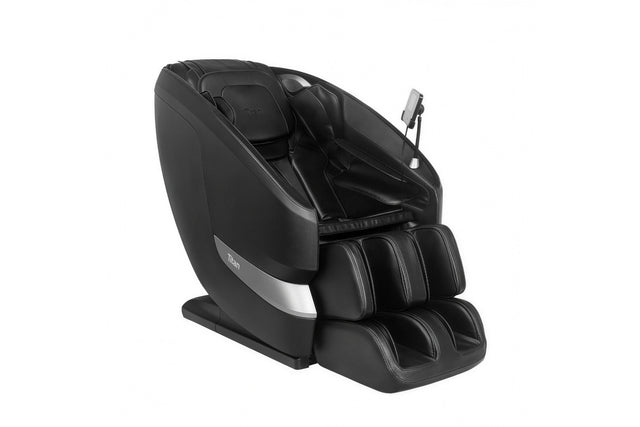
The Core Comfort Features That Matter Most
These are the "buy it for life" features—if you get them right, the chair tends to satisfy long-term. If you miss them, no amount of extra modes will fix the fundamentals.
1) Track design and length (your real coverage)
The track determines where rollers can travel and how well the chair can address full-body tension. Longer, smoother coverage is typically the difference between "nice back rub" and "complete reset."
• S-Track: Follows the natural curve of the spine; strong for back-specific work.
• L-Track: Extends down into the glutes/hamstrings; better for lower-body tension patterns.
• SL-Track: A blend—spinal contour plus extended reach; often ideal for full-session balance.
If glutes and hamstrings are non-negotiable (athletes, runners, anyone who sits a lot), prioritize L or SL coverage.
2) Roller system quality (depth, feel, and precision)
Rollers are responsible for most of the "deep tissue" sensation—kneading, tapping, rolling, and targeted pressure. The most important point isn't the marketing label; it's whether the rollers feel controlled, fluid, and consistent at your preferred intensity.
• 2D rollers: Move up/down and side-to-side; pressure is more uniform.
• 3D rollers: Add depth in/out so pressure can increase or soften.
• 4D rollers: Add speed/rhythm variation (and sometimes enhanced control) for a more "human-like" flow.
In practice: 3D (or well-executed 4D) matters if you want both gentle and deep sessions without the massage feeling sharp or overly aggressive.
3) Body scanning and adjustability (fit for real humans)
Body scanning helps the chair locate shoulders and map your back so rollers land where they should. This is especially important if you are outside "average" height ranges or if multiple people share the chair.
Look for:
• Shoulder position adjustment after scanning (so you can fine-tune placement)
• Multiple intensity steps for rollers and airbags
• Width adjustment (narrow vs wide roller spacing changes the feel dramatically)
4) Airbags + rollers together (support plus relief)
Rollers and airbags are not interchangeable—they're complementary. Rollers tend to deliver targeted pressure; airbags provide compression, circulation-style comfort, and a feeling of being "held" in place.
• Rollers: Great for back tension, knots, and targeted work.
• Airbags: Great for shoulders/arms/hips/calves/feet; can feel soothing and supportive.
The feature that truly matters: independent intensity control so airbags don't feel overly tight while rollers feel too light (or vice versa).
5) Zero Gravity recline (comfort, alignment, and relaxation)
Zero Gravity is a reclined position designed to distribute weight more evenly, which can help you relax into the chair and reduce pressure points. Many people also find it makes roller contact feel more consistent across the back.
What to prioritize:
• More than one recline stage (so you can choose a reading-like recline vs a deeper session angle)
• Stability and quiet movement as the chair transitions
For a deeper technical explanation of what the position is doing, see What Is Zero Gravity in a Massage Chair?
6) Controls you'll actually use
Comfort is also behavioral: if a chair is complicated, it gets used less. A refined experience usually includes quick-start programs, simple intensity changes, and easy-to-reach controls (remote, dial, or touchscreen).
Nice-to-Have Features (When They're Worth It)
These features can elevate the experience, especially in premium models. They're best treated as "add-ons" after you've confirmed coverage, fit, and intensity control.
Heat and warming elements
Gentle heat can make sessions feel calmer and help muscles feel more receptive to massage. Prioritize heat that feels even and comfortable rather than overly hot or too localized.
Foot rollers and calf attention
If you stand all day, walk a lot, or train regularly, calf and foot features can be surprisingly meaningful. For others, it's enjoyable but not essential.
Stretch programs
Stretch modes can feel restorative, particularly for hips, hamstrings, and lower back tightness. Look for adjustability and comfort—stretch should feel supported, not forced.
Speakers, ambient lighting, and "spa" extras
These can enhance relaxation, but they rarely change the quality of the massage itself. If you're choosing between better coverage vs better speakers, choose coverage.
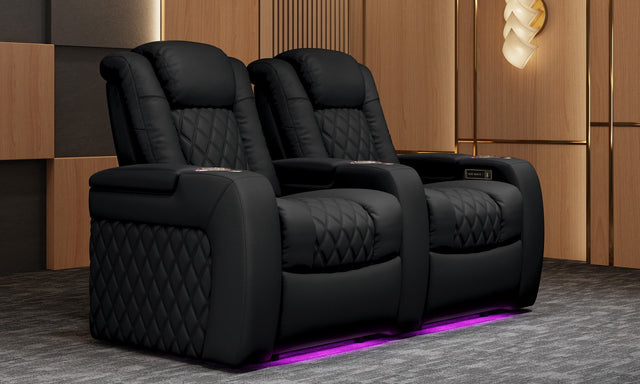
A Priority Ladder for Different Buyer Types
This is the simplest way to use a massage chair buying guide when you're comparing premium models: choose the top priorities that match your routine, then only pay for extras that support those priorities.
| Buyer type | Core comfort priorities (top tier) | Worth considering next | Usually optional |
|---|---|---|---|
| Families / shared use | Body scanning, wide intensity range, easy controls, durable upholstery | User profiles, quick-start programs, quieter motors | Extra audio features, niche auto modes |
| Athletes / active recovery | Long track (L/SL), glutes/hamstrings coverage, calves/feet, strong roller control | Stretch programs, heat, customizable routines | App gimmicks, decorative lighting |
| Desk workers | Neck/shoulder placement accuracy, upper-back work, comfortable recline, gentle-to-medium control | Heat, air compression for shoulders/arms | Extreme intensity features you won't use |
| Luxury buyers | Refined feel (smooth rollers), quiet operation, premium materials, consistent full-body comfort | Elegant UI/controls, curated programs, space-saving design | Overly complex feature lists |
If you're narrowing down choices in a premium collection, start with your top-tier priorities and compare chairs on those alone. Then add "nice-to-haves" only if they directly improve your routine. You can explore options in the Wellness Series with that approach in mind.
How to Compare Chairs Without Getting Lost in Specs
When product pages list dozens of features, it helps to compare in a fixed order. Here's a practical, low-stress method.
Step 1: Confirm fit and coverage
• Track type and how far it reaches (back only vs glutes/hamstrings)
• Body scan and shoulder adjustment
• Foot and calf design if lower-body tension matters to you
Step 2: Confirm comfort across intensity levels
• Roller intensity range (gentle through deep)
• Airbag intensity levels and zones
• Ability to change roller width and targeted areas
Step 3: Confirm the chair works in your home
• Required clearance for recline (including "wall-hugging" or space-saving designs)
• Doorway and hallway access for delivery
• Noise level (especially for evening use)
Space planning is one of the most common pain points with premium chairs. For a dedicated walkthrough, see How Much Space Does a Massage Chair Need?
Step 4: Only then compare extras
Once the chair meets your core comfort needs, extras like extended program libraries, speakers, and app controls can be chosen based on personal taste.
Frequently Asked Questions
What are the most important features in a massage chair?
The most important features are track coverage (often L or SL), a high-quality roller system with adjustable intensity, body scanning for fit, adjustable airbag pressure, and a comfortable recline (often Zero Gravity). These determine whether the massage consistently lands in the right places and feels good at your preferred pressure.
Is 4D always better than 3D?
No. 4D can feel more natural because it adds rhythm and speed variation, but overall comfort depends on roller tuning, control options, and how well the chair fits your body. A well-designed 3D chair can feel more refined than a poorly tuned 4D chair.
Do I need an SL-track massage chair?
You need SL-track coverage if you want a more complete session that includes both spinal contour and extended reach toward the glutes/hamstrings. If your tension is mostly upper back and shoulders, an S-track can still be satisfying—provided the chair fits you and the rollers feel precise.
Are airbags just "extra," or do they matter?
Airbags matter if you want full-body comfort, especially in shoulders, arms, hips, calves, and feet. They also help you feel supported during deeper roller work. The key is having multiple pressure levels so compression feels soothing, not restrictive.
How do I choose a massage chair for my home?
Choose based on your tension areas, shared-use needs, available space, and the intensity range you'll actually enjoy. If you want a step-by-step framework, read How to Choose a Massage Chair for Your Home.
What's the difference between a full massage chair and a massage recliner?
A full massage chair typically offers longer roller travel, more zones, and more adjustability, while lifestyle massage recliners often focus on lighter massage sensations and simpler operation. For a detailed comparison, see Full Massage Chair vs Lifestyle Massage Recliner: What's the Real Difference?


