

In this article: Learn how far infrared sauna panels really feel in day-to-day use—how placement affects heat distribution, what drives warm-up time, and how to judge comfort beyond spec sheets.
- How Far Infrared Sauna Panels Create Heat (and Why It Feels Different)
- Heat Distribution: Panel Placement, Coverage, and “Cold Spots”
- Warm-Up Time: What Actually Determines How Fast You Feel Heat
- Comfort Factors: Radiant Intensity, Air Temperature, and Seating Position
- How to Evaluate Real-World Performance Beyond the Spec Sheet
- Buying Checklist: Choosing Far Infrared Sauna Panels for Your Home
- Frequently Asked Questions
Far infrared sauna panels perform best when they’re placed to “wrap” your body with even radiant coverage—because comfort depends more on heat distribution and intensity at your skin than on a single temperature number. Warm-up time is influenced by panel wattage, cabin volume, insulation, ventilation, and where the sensors are located, but how quickly you feel heat often comes down to panel placement and distance from the panels.
Quick Takeaways
• Comfort is mostly about coverage: More evenly placed panels (front, sides, back, calves/feet) typically feel better than a single high-output panel.
• Warm-up time isn’t one number: Cabin size, total wattage, wood thickness, glass area, ventilation, and ambient room temperature all matter.
• Radiant heat is directional: If a body area “doesn’t see” a panel, it can feel cooler even if the thermometer reads high.
• Distance changes intensity: Sitting closer to panels increases perceived heat; bench depth and posture affect comfort.
• Look past specs: Ask how panels are arranged, how many surfaces are heated, and whether there’s lower-body coverage for a balanced session.
How Far Infrared Sauna Panels Create Heat (and Why It Feels Different)
Far infrared sauna panels are designed to emit infrared energy that your body absorbs at the surface—creating a warming sensation that’s often described as more “direct” than a traditional hot-air sauna. Instead of relying primarily on superheated air, far infrared focuses on radiant heat: energy traveling from the panel to your skin.

Radiant heat vs. hot air: the practical difference
In real-world use, this matters because your comfort can improve even at lower air temperatures. If the panels are well placed, you may feel warmed through while the cabin air stays more breathable than a high-temperature, convection-dominant sauna.
Why “panel type” conversations can get confusing
Shoppers often see terms like carbon, ceramic, or “full-length” panels used as shorthand for performance. In practice, panel construction matters less than total coverage, placement, and how the sauna manages heat across the cabin. A great panel system is one that creates consistent comfort—without forcing you to chase heat by constantly shifting position.
Heat Distribution: Panel Placement, Coverage, and “Cold Spots”
Heat distribution is the number-one comfort factor for far infrared sauna panels. Because radiant heat is directional, your body warms best when multiple panels are positioned around you—not just behind you.

What “good coverage” typically includes
• Back panel for core warmth
• Side panels to reduce uneven heating on arms and torso
• Front panel so you’re not warm only on one side
• Lower-body coverage (calf/foot or lower front) for a balanced, full-body feel
Why lower-body heat matters for comfort
If your upper body is receiving strong radiant heat but your legs and feet are under-heated, you can feel “hot but not settled.” A sauna that includes lower-body panel placement often feels more relaxing because your entire body reaches a consistent comfort level.
Common reasons people experience cold spots
• Panels only behind the bench, leaving the front of the body cooler
• Large glass surfaces that can feel cooler to sit near
• Deep benches that place you farther from the main emitters
• Underpowered lower area, especially in taller cabins
Warm-Up Time: What Actually Determines How Fast You Feel Heat
Warm-up time is often marketed as a single number, but it’s better understood as a system outcome. Two saunas with the same “max temperature” can feel completely different in the first 10 to 15 minutes.
The biggest factors that influence warm-up time
• Total wattage vs. cabin volume: More power relative to space typically shortens warm-up.
• Ambient room temperature: A cold garage or basement can add noticeable time.
• Insulation & construction: Thicker wood and tight door seals help retain warmth.
• Glass area: More glass can mean more heat loss compared to wood.
• Ventilation design: Necessary airflow can slightly slow the climb, but improves comfort and air quality.
• Sensor placement: Thermostats measure air temperature in one location, not how your body feels.
“Air temp warm-up” vs. “skin-feel warm-up”
With far infrared sauna panels, you may feel warmed sooner than the cabin air reaches its setpoint. This is why many owners judge readiness by comfort—when the panels feel active and your body begins to relax—rather than waiting for a thermometer to hit a specific number.
Quick comparison: what tends to warm up faster
| Scenario | Typical effect on warm-up time | Why it happens |
|---|---|---|
| Smaller cabin with strong panel coverage | Faster | Less air and material to warm; better radiant “wrap” |
| Larger cabin with minimal lower-body panels | Slower to feel balanced | Upper body warms first; legs/feet lag |
| Cold ambient room (garage/basement) | Slower | More heat loss to surrounding surfaces |
| More glass surface area | Sometimes slower | Higher heat transfer than wood; cooler nearby surfaces |
Comfort Factors: Radiant Intensity, Air Temperature, and Seating Position
Comfort is where far infrared sauna panels either feel quietly luxurious—or oddly uneven. The goal is a steady, gentle intensity that encourages longer, calmer sessions.
Intensity: more isn’t always better
Higher output can reduce warm-up time, but if the panel layout concentrates heat too narrowly, you may feel “hot spots” on the back or thighs. Many people prefer a design that spreads output across multiple panels, creating an even, restorative feel.
Air temperature still matters (even in infrared)
Infrared isn’t purely “airless” heating. As panels run, surfaces warm and the air temperature rises too. Good comfort often comes from the blend: radiant warmth on the body plus gently warmed air that doesn’t feel stuffy.
Seating position changes the experience
• Closer to panels = stronger perceived heat
• Upright posture often feels warmer across the torso than reclining away from side/front emitters
• Bench height can affect head/shoulder warmth and overall balance
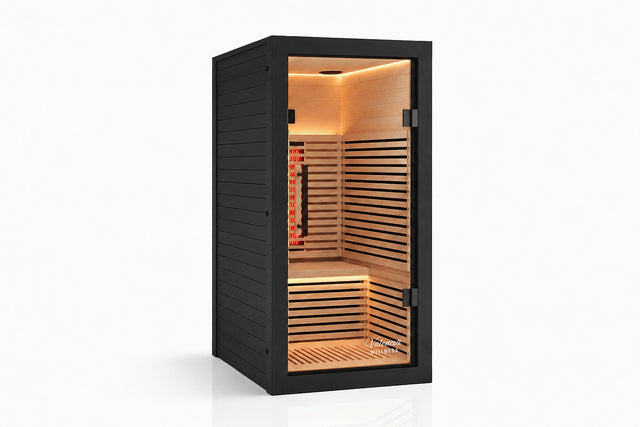
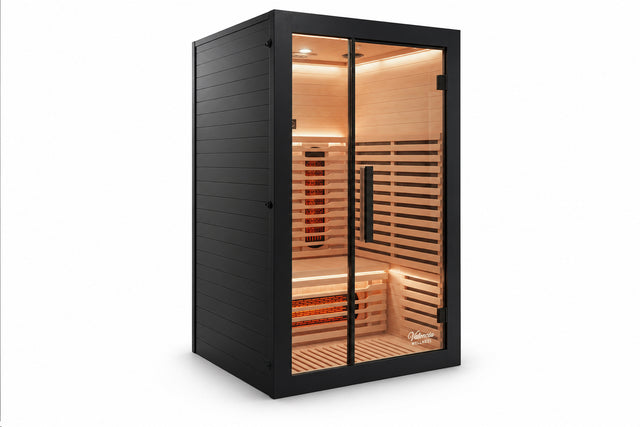
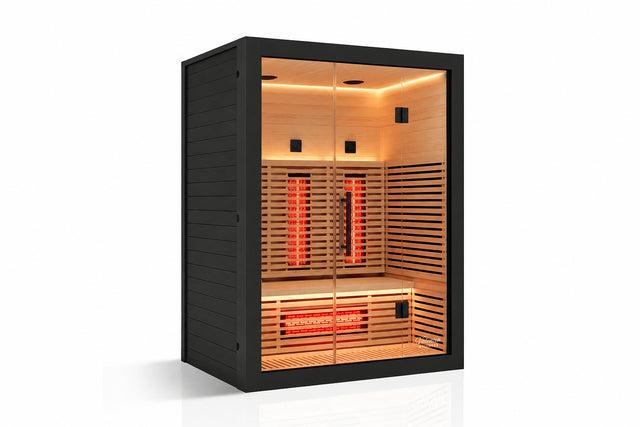
If you’re shopping for a home wellness upgrade with a comfort-first mindset, it helps to look at the entire interior layout (bench depth, panel locations, and lower-body heat). For options designed around daily-use comfort, explore the Valencia Wellness Series.
How to Evaluate Real-World Performance Beyond the Spec Sheet
Spec sheets are useful, but they rarely predict how a sauna will feel at minute eight of a session—when you’re deciding whether to stay in or step out. Here’s what to prioritize when comparing far infrared sauna panels.
1) Map the panel layout like a “heat plan”
Ask: Where are the panels located relative to the body? Ideally, you want coverage that matches how you sit—back, sides, and lower body—so warmth feels even without constant repositioning.
2) Look for balanced lower-body heating
Lower-body coverage can be a comfort multiplier. Warm legs and feet often make the entire session feel calmer and more consistent, especially in cooler climates.
3) Consider cabin materials and heat retention
Wood choice, thickness, door seals, and the amount of glass all influence how steady the cabin feels. A sauna can have strong panels but still feel inconsistent if it loses heat quickly to the room around it.
4) Pay attention to ventilation strategy
Good airflow supports a fresh, breathable session and helps manage perceived comfort. For a deeper dive, see Infrared Sauna Ventilation: What Homeowners Need to Know.
5) Use manufacturer claims carefully
Be cautious with phrases like “fastest warm-up” or “highest temperature.” They can be influenced by test conditions, sensor location, ambient room temperature, and how the unit is configured. When possible, look for:
• Clear interior diagrams showing panel placement
• Real photos (not just renderings)
• Practical guidance on typical warm-up in a normal home environment
Buying Checklist: Choosing Far Infrared Sauna Panels for Your Home
If you want a sauna that feels comfortable day after day, use this checklist to narrow your options.
Panel and comfort checklist
• Does the cabin heat your front and sides, not just your back?
• Is there dedicated lower-body heating (calves/feet or lower front coverage)?
• Is the bench depth appropriate so you’re not sitting too far from the panels?
• Is the heat likely to feel even for different body types and heights?
Home setup checklist
• Placement & clearances: Ensure the sauna fits with safe airflow and door swing space. See Indoor Infrared Sauna Placement Guide: Flooring, Wall Clearance, Moisture, and Electrical Access.
• Materials & durability: Wood species, glass quality, and panel protection all matter for long-term ownership. See Infrared Sauna Materials Guide: Wood, Glass, Heating Panels, and Long-Term Durability.
• EMF considerations: If low-EMF design is important in your home, compare how brands measure and disclose it. See Low-EMF Infrared Sauna: Why It Matters.
If you’re comparing models now, browsing a curated set designed for at-home comfort can make the process simpler. Explore our Wellness Series to see layouts and configurations built for everyday relaxation.
Frequently Asked Questions
Do far infrared sauna panels heat the air or your body?
Far infrared sauna panels primarily warm your body through radiant energy, and they also warm the air over time. Most people notice body warmth first, then a gradual rise in cabin air temperature as surfaces heat up.
Why does one side of my body feel hotter in an infrared sauna?
Infrared heat is directional, so the side facing a panel receives more radiant energy. Saunas with limited side/front panel placement can feel uneven; broader coverage helps create a more balanced experience.
How long should far infrared sauna panels take to warm up?
Warm-up depends on cabin size, total wattage, ambient temperature, insulation, and ventilation. Many users judge readiness by comfort—when the panels feel active and the session feels steady—rather than waiting for a specific temperature reading.
Are carbon or ceramic panels more comfortable?
Comfort usually comes down to panel placement, coverage, and overall design more than the label “carbon” or “ceramic.” A well-designed layout that warms your back, sides, and lower body tends to feel better than a single concentrated heat source.
What should I look for if I want a gentler, more relaxing feel?
Look for even panel coverage, lower-body heating, and a layout that doesn’t force you to sit close to one panel to feel warm. Balanced radiant intensity and breathable airflow typically create a calmer, longer-session comfort.
Can I add more panels to increase warmth?
Adding panels depends on the sauna model’s design and electrical capacity. Some manufacturers offer expansion options, but most residential infrared saunas are designed to operate optimally with their included panel configuration. Check your model’s documentation before modifying — exceeding the rated electrical load can affect safety and warranty coverage.


