

In this article: Recliner seat depth is the single measurement most likely to make a premium wellness recliner feel “perfect” or “almost right”—and it affects thigh support, shoulder posture, elbow comfort, and pressure points more than most shoppers expect.
- Zero Gravity Recliner Angle Explained: How Recline Geometry Reduces Body Pressure
- Heat and Massage Recliners vs Standard Recliners: What Actually Changes in Daily Comfort
- How Lumbar Heat, Massage Zones, and Recline Positioning Work Together
- Power Headrest and Zero Gravity Seating: How Neck Angle Affects Long-Session Comfort
- Wellness Recliner Ergonomics: Seat Depth, Backrest Pitch, Arm Height, and Pressure Distribution
- Frequently Asked Questions
The best way to choose a wellness recliner is to match recliner seat depth (plus backrest pitch and arm height) to your body so your thighs are supported without knee pressure, your shoulders sit naturally on the backrest, and your elbows rest comfortably without lifting or slouching. When these core ergonomics align, heat, massage, and Zero Gravity positioning feel smoother, more consistent, and easier to use for long sessions.
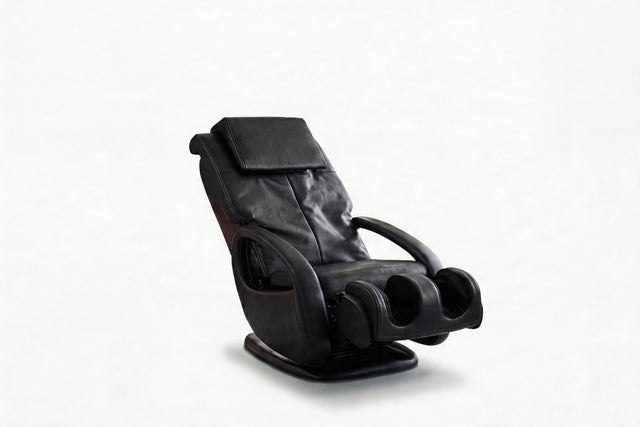
If you’re comparing premium models, start by browsing the Valencia Wellness Series and use the fit checks below to narrow down which silhouettes and adjustability features are most likely to feel “custom” in your home.
Quick Takeaways
• Recliner seat depth should support most of your thigh while leaving a small gap behind the knee to reduce pressure and improve circulation comfort.
• Backrest pitch changes where your shoulders and mid-back land; too upright can feel perching, too reclined can push your head forward without a supportive headrest.
• Arm height affects neck and shoulder tension; the right height lets your elbows rest with relaxed shoulders, especially during long movie or reading sessions.
• Pressure distribution improves when seat depth, lumbar support, and recline geometry work together—often the difference between “soft” and “supportive.”
• Measure at home (hip-to-knee, shoulder height, elbow height, and wall clearance) to self-qualify fit and reduce return risk.
Zero Gravity Recliner Angle Explained: How Recline Geometry Reduces Body Pressure
Zero Gravity is a recline geometry designed to shift load away from common pressure points by distributing your body weight more evenly across the backrest and seat, while elevating the legs to reduce “pull” at the lower back and hips.

What “recline geometry” means in real life
Two recliners can both “recline,” yet feel completely different because of how the seat pan tilts, how the backrest opens, and where the pivot points land under your hips and knees. In a well-executed Zero Gravity position, you’ll typically notice:
• Less pressure at the tailbone because weight spreads across more surface area.
• Less “slide-forward” sensation because the body is cradled rather than perched.
• More stable leg support, which can reduce the feeling of knees being “pulled” by a short seat or footrest.
Fit tip: seat depth still matters in Zero Gravity
Even in a Zero Gravity position, recliner seat depth influences where your knees land and whether your thighs stay supported. If the seat is too deep for your leg length, you may feel pressure behind the knees; if it’s too shallow, your thighs may feel under-supported and you may “hunt” for a comfortable posture during long sessions.
For model options that emphasize relaxation-focused positioning, explore the Wellness Series collection and prioritize adjustability (power recline, headrest, lumbar) if you share the chair with someone of a different height.
Heat and Massage Recliners vs Standard Recliners: What Actually Changes in Daily Comfort
A heat and massage recliner changes daily comfort by adding targeted warming and rhythmic pressure that can help your body unwind—especially when paired with supportive ergonomics—while a standard recliner mainly changes posture angle and cushioning feel.

What heat adds (beyond “warmth”)
Heat is most noticeable when it’s applied where your body holds tension—commonly the lumbar area. In day-to-day use, it can make a recliner feel more “inviting,” especially in cooler rooms, and can help many people relax into the backrest more easily.
What massage adds (beyond “vibration”)
Massage systems vary widely, but in general they add:
• Rhythmic stimulation that can help reduce the feeling of stiffness after sitting or standing for long periods.
• Better perceived support when massage zones align with your body (which is where correct recliner seat depth and backrest pitch become important).
• A routine benefit: many owners use short sessions (10–20 minutes) as a consistent end-of-day reset.
Why ergonomics decide whether heat and massage feel “right”
Heat and massage feel best when the chair fits. If recliner seat depth is too long or the backrest pitch places your shoulders awkwardly, massage zones may land too high/low, and heat may feel less targeted. Think of features as amplifiers—good fit makes them feel more natural and more precise.
How Lumbar Heat, Massage Zones, and Recline Positioning Work Together
Lumbar heat, massage zones, and recline positioning work together by encouraging your lower back to settle into support while recline reduces compressive load and massage adds gentle movement. The result is often a deeper, more “even” relaxation—when the chair’s dimensions match your body.
The comfort chain: from posture to pressure points
In practical terms, comfort tends to follow this sequence:
• Recline positioning sets the overall body angle and how your weight distributes.
• Lumbar support (and lumbar heat) influences whether your lower back feels “held” or unsupported.
• Massage zones are most effective when rollers/airbags align with your natural curves and muscle groups.
At-home check: confirm your “neutral” lumbar feel
Sit all the way back, then notice whether your pelvis feels level and your lower back feels gently supported without forcing an arch. If you feel like you must scoot forward or tuck a pillow behind you in most chairs, that’s a sign you should prioritize:
• Better lumbar contouring or lumbar adjustment
• A recliner seat depth that supports your thighs without pushing behind the knees
• A backrest pitch that keeps shoulders comfortably anchored
To compare comfort-oriented designs and options, start with the Valencia Wellness Series and shortlist models with adjustability if you plan to use heat and massage daily.
Power Headrest and Zero Gravity Seating: How Neck Angle Affects Long-Session Comfort
Neck angle becomes a long-session comfort issue when your recline position causes your chin to tip forward or your head to “float” without support. A power headrest helps fine-tune this angle so you can recline deeply while keeping your gaze and airway comfortably aligned for reading, watching TV, or relaxing.
Signs your head/neck angle is off
• Chin-to-chest feeling when reclined (you feel like you’re craning forward to see the screen).
• Neck tension after 20–30 minutes, even if the seat feels comfortable.
• Constant repositioning (sliding down, adding a pillow, or holding your head up).
Why seat depth and backrest pitch influence neck comfort
Neck comfort isn’t isolated to the headrest. Recliner seat depth affects whether your pelvis stays stable or slides forward, and backrest pitch affects where your shoulders land. If your shoulders aren’t comfortably anchored, your neck often compensates—especially in a deeper Zero Gravity recline.
Simple home measurement: eye-line to screen
If you’re buying primarily for movie nights, measure your typical viewing height (center of the TV screen from the floor) and compare it to your seated eye-line in your current chair. If you typically recline, a power headrest is often the easiest way to keep your gaze level without stacking pillows.
Wellness Recliner Ergonomics: Seat Depth, Backrest Pitch, Arm Height, and Pressure Distribution
Wellness recliner ergonomics come down to four fit variables: recliner seat depth (thigh support), backrest pitch (shoulder and spine alignment), arm height (elbow comfort and shoulder relaxation), and overall pressure distribution (how evenly the chair supports you over time).
Recliner seat depth: the fit measurement that changes everything
Recliner seat depth is the horizontal distance from the backrest (where your hips contact) to the front edge of the seat cushion. It directly affects:
• Thigh support: too shallow can feel perched and can concentrate pressure under the sit bones.
• Behind-the-knee pressure: too deep can press into the popliteal area (the soft area behind the knee), which may feel restrictive during long sessions.
• Pelvic stability: a seat that matches your leg length helps you stay “set” in the chair rather than sliding forward.
How to measure recliner seat depth fit at home (2 minutes)
- Measure your “butt-to-knee” length: sit against a wall (or firm chair back), then measure from the wall to the back of your knee.
- Subtract a comfort gap: aim for roughly 1–2 inches of space between the seat edge and the back of your knee for long-session comfort.
- Compare to seat depth: if the chair’s seat depth is close to your adjusted number, you’re more likely to get full thigh support without knee pressure.
Note: bodies vary, and cushion softness changes “effective” depth. When in doubt, prioritize adjustability and a return-friendly selection process.
Backrest pitch: where your shoulders land
Backrest pitch is the angle of the backrest relative to the seat in an upright or lightly reclined posture. It influences whether your upper back and shoulders feel naturally supported or subtly pushed forward/back. In real life:
• Too upright can feel like you’re perching, which may increase pressure on the sit bones.
• Too reclined can feel relaxing at first, but may encourage slouching if lumbar and head support aren’t dialed in.
Arm height: elbow comfort and relaxed shoulders
Arm height should allow your elbows to rest with your shoulders relaxed—not shrugged upward and not reaching down. If arm height is off, people often feel it as:
• Neck/shoulder tension (arms too high)
• Forearm fatigue and a rounded upper back (arms too low)
• One-sided discomfort if the chair forces uneven elbow support
At-home check: elbow-to-seat height
Sit comfortably with shoulders relaxed and elbows at roughly 90 degrees. Measure from the seat surface to the bottom of your elbow. When evaluating a recliner, look for an arm height that’s close to this number, keeping in mind that cushions compress over time.
Pressure distribution: the “premium feel” you notice after 30 minutes
Pressure distribution is how evenly the chair supports your body across contact points—commonly the shoulder blades, lumbar area, tailbone, and thighs. Even distribution matters because pressure hotspots often show up after you’ve been seated for a while, not in the first 60 seconds.
| Body area | What discomfort can indicate | Ergonomic adjustment to prioritize |
|---|---|---|
| Behind the knees | Seat feels too deep or footrest angle isn’t supporting the legs evenly | Recliner seat depth match; smoother recline geometry; supportive leg elevation |
| Tailbone / sit bones | Seat feels too shallow, too firm in one spot, or posture is “perched” | Better thigh support via seat depth; improved backrest pitch and lumbar support |
| Mid-back / shoulder blades | Backrest pitch isn’t matching your torso; shoulders don’t feel anchored | Backrest contour and pitch; consider power headrest for reclined use |
| Neck | Head angle is unsupported in deeper recline | Power headrest adjustment; check that shoulders stay back comfortably |
| Elbows / forearms | Arms are floating or shoulders are shrugging | Arm height and width; consider how you use remotes, phone, or a book |
Room layout matters: measure wall clearance before you buy
Premium recliners often need different clearance depending on recline mechanism. Before choosing a model, measure:
• Depth from wall: distance from your baseboard to the front of the seat in your intended placement.
• Recline clearance: how far the back may move toward the wall (varies by design).
• Walkway space: maintain comfortable paths around the chair, especially if it sits near a doorway or coffee table.
If you’re ready to narrow down options based on fit and space, the simplest next step is to compare silhouettes and features in the Valencia Wellness Series and shortlist models that match your body measurements and typical use (reading, TV, post-work recovery).
Frequently Asked Questions
What is the ideal recliner seat depth for comfort?
The ideal recliner seat depth supports most of your thigh while leaving about 1–2 inches of space behind your knee. That small gap helps reduce behind-the-knee pressure during long sessions while still keeping your legs supported.
How do I know if a recliner seat is too deep?
A recliner seat is often too deep if the front edge presses behind your knees or you can’t sit fully back without losing foot contact or feeling restricted. Many people compensate by sliding forward—usually a sign the seat depth doesn’t match their leg length.
How do I measure my body for recliner seat depth at home?
Measure from the back of your hips to the back of your knee while sitting upright against a firm back. Then subtract 1–2 inches for a comfort gap and compare that number to the chair’s listed seat depth (keeping in mind cushion compression).
Why does arm height matter in a wellness recliner?
Arm height matters because it determines whether your shoulders can relax while your elbows are supported. If the arms are too high, you may shrug and feel neck tension; too low, you may slouch and strain your upper back during long sessions.
Does Zero Gravity recline help with pressure points?
Zero Gravity recline can help reduce pressure points by distributing weight more evenly and elevating the legs. However, it works best when seat depth and backrest support match your body so you don’t create new hotspots behind the knees or at the tailbone.
Do heat and massage features change how a recliner should fit?
They don’t change the fundamentals, but they make fit more important. When seat depth, backrest pitch, and support align with your body, massage zones and lumbar heat tend to feel more targeted and consistent rather than “slightly off.”


