

In this article: Massage chair body scanning technology uses a short sensor-driven “fit check” to estimate your shoulder height and spine curve so rollers and airbags can land in the right places with more consistent pressure.
- What Massage Chair Body Scanning Technology Does (and Doesn’t) Do
- How Sensors Map Shoulder, Spine, and Back Position
- What to Expect During a Body Scan Session
- How to Get More Accurate Body Scan Readings (Practical Tips)
- Buying Checklist: What to Look for in a High-Precision Scan
- Frequently Asked Questions
Massage chair body scanning technology works by using sensors to estimate your shoulder height, upper-back width, and spine curvature, then automatically calibrating roller start points, travel range, and pressure so the massage feels more tailored to your body. It’s designed to reduce “guesswork” (rollers too high, too low, or too intense), especially in premium chairs shared by multiple family members. However, even excellent scans have limits—manual shoulder-position tweaks and intensity controls still matter for a truly comfortable session.
Quick Takeaways
• Most body scans prioritize shoulder position first, then adjust roller path to follow your back’s curve more naturally.
• Scanning improves consistency, not perfection; posture, clothing thickness, and where you sit can change the result.
• If the chair is shared, save user profiles (when available) and re-run the scan when switching users.
• Manual adjustments still matter for roller intensity, shoulder height fine-tuning, and spot targeting.
• For buyers, track design (SL-track) and mechanism quality often influence “fit” as much as the scan itself.
What Massage Chair Body Scanning Technology Does (and Doesn’t) Do
At a comfort level, massage chair body scanning technology aims to answer one question: “Where is your body, exactly, right now?” Once the chair has a reasonable map of your shoulders and back shape, it can place rollers where they’re meant to work—typically along the neck/upper trapezius, shoulder blade region, mid-back, and lower back.

What it typically calibrates
• Shoulder height: So kneading and tapping patterns don’t land too high on the neck or too low on the shoulder blades.
• Back curvature: So the roller carriage can maintain steadier contact along the spine’s natural curve.
• Pressure behavior: Many chairs use scan data to reduce “surprise pressure spikes” by modifying how aggressively rollers press in at certain points.
• Airbag timing/zone targeting: Some models coordinate air cells with where your back and shoulders sit in the chair.
What it doesn’t do (realistic limitations)
• It can’t diagnose pain or “find knots” medically. It’s mapping position and contour, not evaluating tissue health.
• It may not perfectly read very broad/narrow frames or unusual postures every time—small seating differences change the scan.
• It won’t replace preferences. Two people with the same height may want different roller depth, speed, and focus.
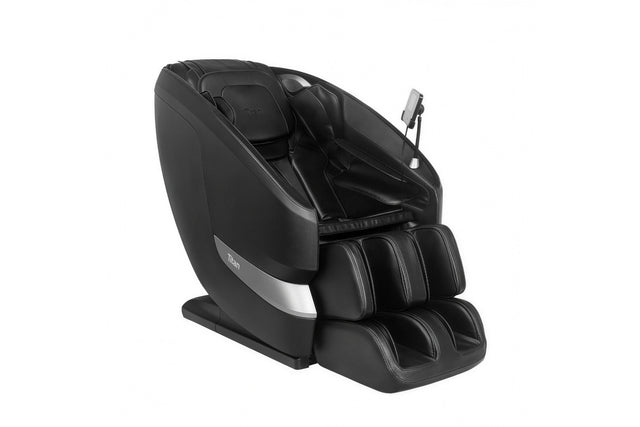
If you’re comparing premium options, consider body scanning as one part of the precision story. Track geometry and roller mechanism design also strongly affect whether coverage feels “made for you.” You may also want to explore the Valencia Wellness Series for models positioned around tailored comfort and family-friendly adjustability.
How Sensors Map Shoulder, Spine, and Back Position
Most massage chair body scanning technology uses a brief automated routine where the chair’s massage mechanism moves and “probes” your back. Depending on the chair, the scan may combine multiple inputs—mechanism position feedback, pressure/contact sensing, and sometimes additional sensor types—to estimate your body’s key landmarks.

1) The shoulder “landmark” is the anchor point
In many chairs, the scan focuses on locating the shoulder region because it’s where incorrect placement is most noticeable. If rollers ride too high, they can feel like they’re pressing into the base of the skull; too low, and you miss the shoulder and upper trapezius zones that many people want targeted after a long day.
2) Contact and contour mapping along the back
As the rollers travel down, the chair estimates how your back curves and how closely it can maintain contact. This helps the chair decide:
• Where to start and stop certain techniques
• How much to “push in” as it moves from upper back to mid-back to lumbar
• How to keep pressure steadier across changing curvature
3) Why scan quality depends on track design and mechanism control
The scan can only be as useful as the chair’s ability to follow what it learns. Chairs with longer, more anatomical track designs often deliver a more continuous feel from shoulders through the lower back and into the glutes. If you’re evaluating fit and coverage, the track and mechanism design are essential context alongside scanning.
Related reading within this article series:
• SL-Track Massage Chairs: Why Track Length and Curvature Matter?
• Dual Massage Mechanism Chairs Explained: How Independent Roller Systems Improve Coverage?
What to Expect During a Body Scan Session
If you’ve never experienced it, a body scan can feel surprisingly subtle. It usually takes under a minute, and it’s meant to be a quiet setup step—not an aggressive massage.
Typical step-by-step flow
- Seat and recline positioning: The chair settles you into a repeatable posture (often slightly reclined).
- Mechanism “check”: Rollers move to a start position near the upper back and begin the scan pass.
- Shoulder detection and confirmation: Some chairs ask you to confirm or adjust shoulder height using the remote/app.
- Calibration: The chair stores the measurement for that session (and sometimes into a user profile).
- Massage begins: Techniques start with the updated placement and pressure assumptions.
What it should feel like
• Light roller contact moving slowly, sometimes with brief pauses
• Minimal intensity—more like a “mapping pass” than deep tissue work
• A short confirmation prompt if the chair supports manual shoulder-height correction
Signs your scan may be off
• The massage consistently hits above your shoulders (too high)
• Techniques land on the shoulder blades when you wanted neck/upper traps (too low)
• Pressure feels uneven—intense at one point, weak at another—despite the same intensity setting
How to Get More Accurate Body Scan Readings (Practical Tips)
Because massage chair body scanning technology is posture-sensitive, small setup habits can noticeably improve accuracy—especially in a household where people of different heights share one chair.
Sit “all the way back” (and keep your hips square)
Try to settle your hips fully into the seat and let your back rest evenly against the back pad. If you perch forward or lean to one side, the chair may misread shoulder height and back centerline, leading to off-target rollers.
Keep your head and shoulders neutral
A forward head posture (chin jutting) or shrugged shoulders can shift where the chair thinks your shoulder line begins. A calm, neutral posture—shoulders relaxed, head centered—often produces a cleaner mapping pass.
Watch bulky layers and thick hoodies
Heavy sweatshirts, hooded tops, and thick seams can alter how rollers contact your back. For the most consistent results, consider:
• Thin t-shirt or light layer during scanning
• Removing hoodies or jackets (especially if the hood bunches behind the neck)
Re-run the scan when switching users
If multiple family members share the chair, re-run the scan when you change users—particularly when there is a notable height difference. If the chair supports user profiles, save a profile per person to reduce repeated adjustments.
Use manual shoulder adjustment when offered
Many chairs allow you to nudge the shoulder position up/down after scanning. This is not a failure of the scan—it’s a practical “fine tune” step. If your upper-body proportions are unique (long torso, broad shoulders, or shorter neck), manual correction can make the massage feel significantly more natural.
When manual adjustments still matter most
• Deep intensity preferences: A scan can place rollers correctly, but it can’t decide what “too intense” feels like for you.
• Target work: If you want a specific spot (mid-back, lumbar), manual spot control is still the most direct method.
• Day-to-day variability: Fatigue, stiffness, and sensitivity change; adjusting intensity and width helps match the moment.
Buying Checklist: What to Look for in a High-Precision Scan
If body scanning is a key buying concern, evaluate the entire “precision chain”—scan, track, mechanism control, and user adjustability. The best experience is a blend of accurate sensing and refined execution.
| What to check | Why it matters | What to look for in practice |
|---|---|---|
| Shoulder-height detection + manual fine-tune | Shoulders are the most sensitive placement zone | Simple up/down correction after scan; repeatable results |
| Track length & curvature | Scan data is only helpful if rollers can follow the body comfortably | Smoother coverage from shoulders to lower back (often associated with SL-track designs) |
| Roller depth and control | Better control reduces sudden pressure changes | Multiple intensity levels and consistent contact across the back |
| Adjustable roller width (where available) | Helps fit different shoulder/back widths | Width settings that feel meaningfully different, not just “cosmetic” |
| User profiles (household use) | Reduces setup time and improves consistency | Easy profile switching and saved preferences |
To round out your feature comparison, you may also find these related guides helpful:
• Foot and Calf Massage Systems: Rollers, Airbags, Heat, and Compression Zones?
• Deep Tissue vs Relaxation Massage Chairs: How Roller Depth, Speed, and Pressure Differ?
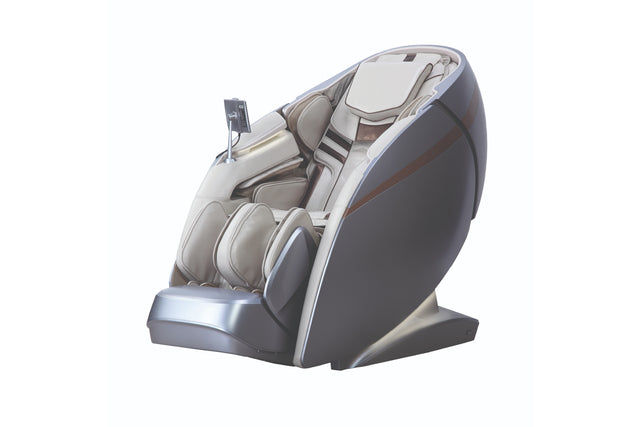
If you’re shopping for a premium chair where precision comfort matters—especially for couples or families—browse the Wellness Series massage chairs to compare options designed around personalized fit, smooth coverage, and everyday ease of use.
Frequently Asked Questions
How accurate is massage chair body scanning technology?
Massage chair body scanning technology is generally accurate enough to place rollers in the correct shoulder-to-lumbar zones, but it won’t be perfect for every body type or posture. The most noticeable improvements are usually better shoulder placement and more consistent roller contact along the back. For best results, combine scanning with manual shoulder-height adjustment and intensity controls.
Do I need to run the body scan every time?
Many people benefit from running the scan whenever seating position changes or when a different user sits in the chair. If you’re the only user and your posture is consistent, you may not need to re-scan every session. In a shared household, re-scanning (or switching user profiles) helps keep roller placement accurate.
Why does the scan sometimes place rollers too high or too low?
Small posture differences and clothing thickness can shift what the sensors “read,” especially around the shoulders and neck. Sitting slightly forward, slouching, leaning to one side, or wearing a thick hoodie can all affect the scan. Sit fully back, relax your shoulders, and use the manual shoulder adjustment if the chair offers it.
Will body scanning adjust massage pressure automatically?
Some chairs use scan data to help manage contact and pressure consistency, but “pressure” is still largely controlled by your intensity settings, technique choice, and mechanism design. If you want a gentler session, lowering intensity and choosing relaxation-oriented programs will make the biggest difference.
Does body scanning help with people who are tall or have long torsos?
It can help, especially for shoulder placement, but tall users should also prioritize track length and coverage range. A good scan plus a track that supports longer travel often feels more natural from upper back through lumbar. If you’re tall with a long torso, look for chairs that combine scanning with strong adjustability and comfortable full-back coverage.


