

In this article: If you’re shopping for home theatre seating in Vancouver, the right choice comes down to measurements, delivery logistics (condos, elevators, narrow halls), moisture-friendly upholstery care, and a layout that fits how you actually watch.
- Why buying home theatre seating in Vancouver is different
- Measure first: doors, elevators, stairs, and turning radius
- Choose upholstery for Vancouver’s humidity (and real life)
- Space-smart layouts for condos and media rooms
- Recommended configurations by room size
- Frequently Asked Questions
For most Vancouver homes, the best home theatre seating is modular, wall-hugging (or space-saving), and ordered to match your exact delivery path—then finished in upholstery that’s easy to maintain in a coastal, moisture-prone climate. This guide covers Vancouver-specific realities like condo/elevator logistics, narrow hallways, moisture-friendly care, and space-smart seating layouts—ending with recommended configurations by room size.
Quick Takeaways
• Measure the entire “delivery path,” not just the room.
Condo elevators, tight corners, and stair turns are the #1 reason seating doesn’t fit as expected.
• Choose space-efficient mechanisms.
Wall-hugger designs and modular rows help keep walkways comfortable in smaller Vancouver media rooms.
• Pick upholstery that’s forgiving in humidity.
Performance fabrics and quality leather/vinyl alternatives can be easier to maintain when moisture and temperature fluctuate.
• Plan for power early.
Powered recline, USB, and lighting are great—if your outlet placement and cord routing are clean and safe.
• Match your layout to how you watch.
Two-seat loveseats, straight rows, and compact sectionals all work—when you prioritize sightlines and aisle space.
1. Why buying home theatre seating in Vancouver is different

Shopping for home theatre seating Vancouver buyers often comes down to two practical constraints: space and access. Vancouver homes (and especially condos and townhomes) commonly have tighter hallways, smaller elevators, limited loading zones, and stricter strata delivery windows. Even when the theatre room is generous, the path to get the seating into the home can be the limiting factor.
Vancouver’s coastal climate can also influence material choices. Humidity swings and damp seasons don’t mean you can’t choose leather or fabric—it simply means you should prioritize easy care, consistent indoor ventilation, and materials that don’t punish everyday life (snacks, pets, kids, and cozy movie marathons).
If you want a starting point for premium comfort that still works in real homes, browse Valencia’s Wellness-focused designs here: Wellness Series home theatre seating.
What to prioritize for Vancouver homes
• Modularity: Seats that can be delivered in manageable pieces and assembled in-room.
• Space efficiency: Wall-hugger recline or compact footprints to preserve walkways.
• Moisture-aware care: Upholstery and cleaning routines that hold up in a humid environment.
• Delivery coordination:

White glove options, appointment scheduling, and packaging removal (often helpful for strata rules).
2. Measure first: doors, elevators, stairs, and turning radius
Before you fall in love with a specific row configuration, measure the full “delivery path” from curb to theatre room. For home theatre seating in Vancouver, this step can save you from costly returns, delays, or last-minute changes.
Condo checklist: what to measure (and confirm with strata)
• Elevator interior dimensions: Door width and cab depth/height (and whether padding is required).
• Hallway widths: Especially near corners and fire doors.
• Turning radius: Tight 90-degree turns are often harder than narrow straight runs.
• Stairwell width and landing depth: Townhomes and walk-ups can be limiting.
• Loading zone rules: Time limits, parking reservations, and delivery windows.
• Service elevator access: Whether it’s available and how to book it.
Room checklist: make the seating fit the experience
• Back wall to screen distance: Helps determine how deep the recline can be without cramping.
• Seat depth when fully reclined: Important for powered recliners in tighter rooms.
• Walkways: Aim for comfortable clearance so getting in/out doesn’t feel like a squeeze.
• Screen sightlines: Ensure headrests and seatbacks don’t block the view from the second row (if applicable).
• Outlet placement: Powered features require a plan for cords and surge protection.
Quick “fit check” table (what to note)

| Measurement point | What to record | Why it matters |
|---|---|---|
| Elevator door | Clear opening width & height | Limits the largest boxed or assembled piece that can enter |
| Elevator cab | Interior depth/width/height | Determines whether long pieces can angle in |
| Hallway corners | Corner-to-corner clearance | Turning is often the real bottleneck |
| Stairs/landings | Width and landing depth | Controls whether seats can pivot safely |
| Theatre room depth | Wall-to-wall depth behind seats | Ensures recline and walking clearance are comfortable |
If you’re planning a premium install, contact us with your measurements and photos of the delivery path. A quick pre-check can prevent surprises on delivery day.
3. Choose upholstery for Vancouver’s humidity (and real life)
Vancouver’s damp seasons and coastal air mean your theatre seating benefits from consistent indoor airflow and sensible care. The goal is simple: keep surfaces clean, keep the room comfortably ventilated, and choose materials that match your household.
Leather, faux leather, and performance fabric: what works well
• Quality leather: Comfortable, refined, and easy to wipe down. In humid environments, maintain with manufacturer-approved conditioning (not over-conditioning) and keep the room well ventilated.
• Premium faux leather (PU) / leather alternatives: Often lower-maintenance and budget-friendly. Look for durable, easy-clean finishes if your theatre room doubles as a family hangout.
• Performance fabrics: A strong choice for busy homes—often breathable and forgiving, with a softer feel and reduced worry about temperature changes.
Moisture-friendly care tips (simple but effective)
• Ventilation matters: Keep airflow consistent—especially in basements or interior media rooms.
• Wipe spills quickly: Gentle, prompt cleaning helps prevent staining or lingering odors.
• Avoid harsh cleaners: Use approved products to protect finishes and stitching.
• Control dampness: If your room is below grade or tends to feel cool/damp, consider a dehumidifier during wet months.

For broader Canadian planning—delivery timelines, room prep, and what to expect beyond Vancouver—see White Glove Delivery in Canada: What to Expect City by City and Home Theatre Seating in Canada: Everything You Need to Know Before You Buy.
4. Space-smart layouts for condos and media rooms
In Vancouver, “home theatre” often means a media room that needs to do more than one job: movie night, sports, gaming, and sometimes even guest seating. The right layout keeps the room calm and functional—without sacrificing that immersive, reclined comfort you’re buying for.
Common Vancouver room shapes (and what tends to work)
• Narrow rooms: A straight row (2–4 seats) with compact arms and a wall-hugger mechanism can keep aisles usable.
• Square rooms: A loveseat plus a single recliner (or a 3-seat row) often balances seating capacity with openness.
• Open-concept dens: A smaller 2-seat setup with clean sightlines helps the theatre zone feel intentional, not crowded.
• Dedicated media rooms: Consider 3–4 seats in a row, or two rows if depth allows and sightlines are planned.
Power, lighting, and “clean cable” planning
Powered recline, USB charging, and LED accents can elevate daily use—especially when your theatre room is also your unwind space. The key is planning outlets and cord routing early so the setup looks refined.
• Map outlets: Identify where each seat will plug in, including any middle seats.
• Choose safe surge protection: Use a quality surge protector and keep cords out of walking paths.
• Plan access: Leave a small service gap if recommended for your model, especially near walls.
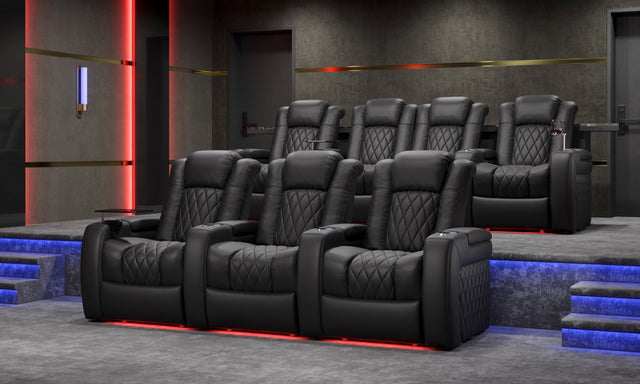
5. Recommended configurations by room size
These are practical starting points for home theatre seating Vancouver shoppers. Your final choice should be guided by screen size, viewing distance, and the space you need behind and in front of the seats when fully reclined.
Small rooms / condo dens (approx. 8 ft x 10 ft to 10 ft x 12 ft)
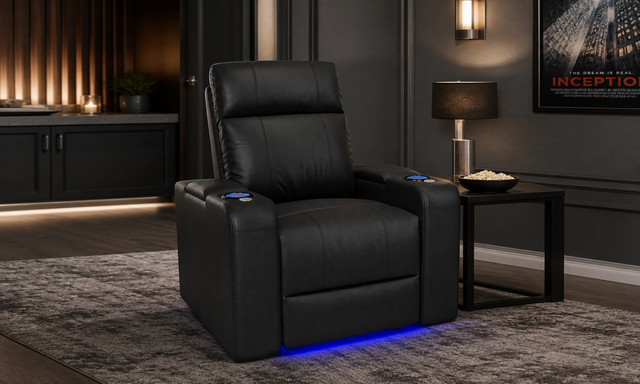
• Best fit: 2-seat loveseat (or 2 individual recliners) with a space-saving recline design.
• Why it works: Keeps the footprint calm, preserves walkways, and fits many elevator deliveries more easily than long, rigid pieces.
• Comfort upgrades to consider: Power headrest and lumbar support for longer viewing sessions.
Medium media rooms (approx. 10 ft x 12 ft to 12 ft x 14 ft)
• Best fit: 3-seat straight row (with or without a center console), or a loveseat + single recliner.
• Why it works: Adds capacity without making the room feel wall-to-wall.
• Layout tip: Protect aisle space—especially if the room has only one main entry point.
Large rooms / dedicated home theatres (approx. 12 ft x 16 ft and up)
• Best fit: 4-seat row, or two rows (for example: 3 seats in front + 2 behind) if sightlines and risers are planned.
• Why it works: Creates a true theatre feel and supports entertaining.
• Planning tip: Confirm second-row sightlines early; taller seatbacks and headrests can change the viewing angle.
Quick configuration table (by room size)
| Room size (typical) | Recommended configuration | Best for |
|---|---|---|
| Small (8x10 to 10x12) | 2-seat loveseat or 2 recliners | Condos, dens, multipurpose rooms |
| Medium (10x12 to 12x14) | 3-seat row or loveseat + 1 | Family movie nights, flexible seating |
| Large (12x16+) | 4-seat row or 2-row plan | Entertaining, dedicated theatre rooms |
Want to compare room planning across regions and housing styles? These Canadian guides can help you refine your shortlist: The Canadian Basement Home Theatre: A Practical Seating Guide and Home Theatre Seating in Calgary & Edmonton: What's Available Near You.
Frequently Asked Questions
What’s the best home theatre seating for Vancouver condos?
\1 because it’s easier to deliver through elevators and tight hallways, and it preserves walkway space once installed. Focus on seat width, recline depth, and whether the seating can be carried in smaller sections.
How do I know if theatre seats will fit in my elevator?
\1 Tight corners in hallways and lobby turns can be as limiting as the elevator itself, so measure those as well.
Is leather a bad idea in Vancouver’s humid climate?
\1 Wipe down regularly, avoid harsh cleaners, and use approved conditioning sparingly. If your room runs cool or damp (common in lower levels), adding a dehumidifier during wet months can help keep the space comfortable.
What layout works best for narrow media rooms?
\1 because it keeps the footprint predictable and makes it easier to maintain an aisle. If you need extra seating, consider a loveseat + single chair rather than a wide sectional that blocks movement.
Can I finance home theatre seating in Canada?
\1 If you’re comparing purchase options, review How to Finance Home Theatre Seating in Canada with PayPlan by RBC.
When is the best time to buy home theatre seating in Vancouver?
\1, but delivery scheduling and stock can vary. For timing guidance, see Best Time to Buy Home Theatre Seating in Canada (Sales & Boxing Day Guide).


