

In this article: Learn what makes Wellness Series home theater seating feel like a true relaxation chair—through posture support, pressure relief, heat-and-massage-style comfort cues, and long-session ergonomics.
- What “Wellness” Means in Home Theater Seating
- The Feel-Factors That Make a Recliner Truly Relaxing
- Massage-Style Comfort: Vibration, Lumbar, and Heat (Without the Hype)
- Materials and Build Details You Notice After Two Hours
- How to Choose the Right Wellness Recliner for Your Routine
- Setup Tips to Make Any Wellness Seat Feel Better
- Frequently Asked Questions
A recliner feels like a true relaxation chair when it reduces pressure points, supports neutral posture in multiple recline angles, and adds gentle “wellness cues” (like heat, supportive lumbar shaping, and massage-style vibration) that make long movies or gaming sessions feel lighter on your body. With Wellness Series home theater seating, the difference is usually less about one flashy feature and more about how the chair distributes weight, cradles your spine, and stays comfortable at hour two and beyond.
If you’ve ever enjoyed the “reset” of a massage chair or the deep calm that comes after time in a sauna, you already understand the goal: comfort that feels deliberate. A wellness-focused theater recliner aims for that same everyday relief—without making medical promises—by combining ergonomic support, smart cushioning, and relaxation-first options designed for real routines.
Quick Takeaways
• Pressure relief
comes from how cushioning, seat angle, and lumbar support spread your weight—not just how soft the foam feels in the first five minutes.
• Neutral posture
matters more than full recline; a great chair supports your head, mid-back, and hips at multiple angles.
• Heat and massage-style vibration
should feel gentle and consistent—more “unwind” than “intense therapy.”
• Materials and build
(foam density, upholstery, frame stability) are what you notice most after long sessions.
• The right fit
depends on your routine: movie marathons, gaming, shared seating, or daily decompression.
What “Wellness” Means in Home Theater Seating
In seating, “wellness” isn’t a trend word when it’s translated into how you feel after sitting for a while. Wellness Series home theater seating is best understood as a comfort system: posture support + pressure relief + relaxation features that encourage your body to let go of tension.

Wellness seating vs. standard recliners
A standard recliner can look premium and still feel fatiguing over time if the seat pan tilts your hips forward, the lumbar area collapses, or the headrest doesn’t meet you where you are. A wellness-style recliner is designed to keep your body supported as you transition from upright to reclined—so comfort remains stable, not temporary.
The “massage chair mindset” (without making medical claims)
Massage chairs are built around a simple promise: you should feel better after a session. Theater seating can borrow that mindset through gentle, non-clinical features—warming, subtle vibration, and better spinal alignment—aimed at comfort, relaxation, and tension release.
For shoppers exploring Valencia’s collection, you can browse the current options here: Wellness Series home theater seating.
The Feel-Factors That Make a Recliner Truly Relaxing
Comfort is physical, but it’s also neurological: your body relaxes faster when it feels supported and stable. These are the elements that create that “exhale” moment when you sit back.
1) Pressure relief you notice in hips, tailbone, and shoulders
Pressure points are the fastest way to ruin a long movie. True relaxation chairs manage pressure through:
• Seat contouring that supports thighs and hips evenly (instead of concentrating weight at the tailbone).
• Balanced cushioning that feels plush on top but supportive underneath.
• Backrest shaping that keeps shoulders from rounding forward, especially when gaming with a controller.
A helpful benchmark: if you “shift and resettle” repeatedly during a film, it’s often a pressure distribution issue—not simply firmness.
2) Posture support that holds up across recline positions
Relaxation isn’t the same as slouching. The most restorative recliners help maintain a neutral posture even when reclined, with:
• Consistent lumbar contact (so your lower back isn’t floating).
• Head and neck support that keeps your chin from jutting forward.
• Hip-to-knee alignment that reduces the “chair is folding me” feeling.
3) Stability and “quiet comfort”
A relaxation chair should feel grounded. Wobble, squeaks, or a footrest that flexes can subtly keep your body on alert. Look for a chair that feels secure when you shift positions, recline, or get in and out—especially if you use it daily.
4) Easy, intuitive controls (because friction breaks relaxation)
If you have to hunt for buttons, hold awkward positions, or fight the recline, you’ll stay tense. Wellness-focused seating prioritizes smooth transitions—because comfort is also about how effortlessly you can get to your preferred position.
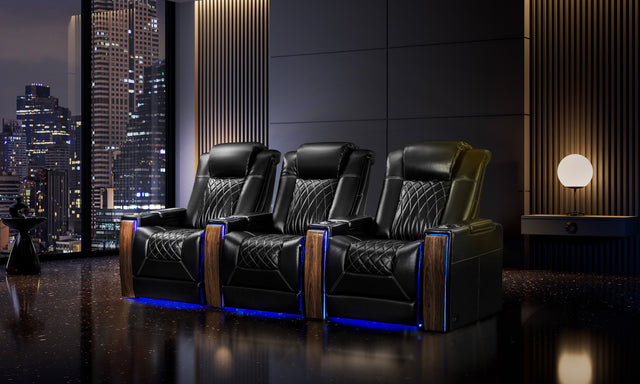
Massage-Style Comfort: Vibration, Lumbar, and Heat (Without the Hype)
Many premium buyers are already familiar with massage chairs, recovery tools, or heat therapy at home. Wellness Series home theater seating brings a gentler version of those cues into a recliner format—designed for relaxation during entertainment, not clinical treatment.
Vibration: why “subtle” often feels better for movies
In a theater recliner, vibration is most enjoyable when it’s even and calming—something you can leave on while watching, not a feature you tolerate for five minutes. Practical tips:
• Choose vibration patterns that feel smooth, not “buzzy,” especially if you’re sensitive to tingling.
• Think routine-based: a low setting before a movie can help you unwind; higher intensity isn’t always more relaxing.
• Check placement: vibration feels most natural when it complements lumbar/seat comfort rather than competing with it.
Lumbar support: the relaxation hinge point
If there’s one area that separates “nice recliner” from “true relaxation chair,” it’s lumbar. Support here can help you feel held rather than collapsed, which many people describe as immediate relief from “desk-day posture.”
Look for lumbar shaping that stays present when reclined. If support disappears at your favorite angle, your muscles tend to brace—exactly the opposite of the wellness goal.
Heat: the simplest “sauna-adjacent” comfort cue
Heat is one of the most familiar wellness signals. It can encourage a sense of calm, especially in the lower back. The best implementations feel:
• Gentle and consistent (even warmth rather than hot spots).
• Easy to control so you can match it to the season, the room temperature, and your personal preference.
• Compatible with long sessions—warmth that feels soothing 45 minutes in is more important than peak heat.
Materials and Build Details You Notice After Two Hours
Showroom comfort is easy. Long-session comfort is engineered. Here are the details that quietly shape how Wellness Series home theater seating feels over time.
Foam feel: plush on top, supportive underneath
Many chairs feel incredible at first because the top layer is soft. The issue shows up later when support “bottoms out.” A more premium, wellness-oriented feel usually comes from layered cushioning—soft enough to invite relaxation, structured enough to maintain alignment.
Upholstery that stays comfortable across seasons
Texture and breathability affect how quickly you settle in. If you’ve used a sauna or heat-based wellness routine, you know the difference materials can make. In seating, upholstery that feels smooth, stable, and comfortable against skin helps you relax sooner—especially for shorts-and-T-shirt movie nights.
Armrest height and width (the gaming factor)
For gaming, arm support can matter as much as back support. Too high, and shoulders rise. Too low, and you hunch. Ideally, your arms feel supported without lifting your shoulders—reducing fatigue during longer sessions.
Headrest support that matches your screen height
Neck tension often comes from the angle between your eyes and the screen. A supportive headrest helps keep your head comfortably aligned so you’re not subtly “holding” your neck for two hours.
Comparing what matters most
| Comfort element | What it feels like in daily use | What to watch for |
|---|---|---|
| Pressure distribution | Fewer fidgets, less tailbone/hip soreness | Seat that concentrates weight in one spot |
| Lumbar support | Lower back feels “held,” not strained | Support disappears when reclined |
| Head/neck support | Jaw unclenches, neck feels lighter | Chin-forward posture, neck tightening |
| Heat feature | Warmth encourages deeper relaxation | Hot spots or limited control |
| Massage-style vibration | Calming, background relaxation | Too intense or distracting for viewing |
How to Choose the Right Wellness Recliner for Your Routine
Wellness looks different depending on how you use your theater. Use these “routine filters” to narrow down what will feel best.
If you do long movies (2+ hours) most nights
• Prioritize pressure relief and lumbar consistency over extra features.
• Look for a recline that keeps your head supported without pushing it forward.
• Choose upholstery that feels comfortable in warm and cool seasons.
If you game for long sessions
• Prioritize arm support and neck posture (screen height matters).
• Massage-style vibration can be a helpful “cooldown” feature between matches—especially at lower intensity.
• Look for easy controls so you can adjust without breaking focus.
If the chair is shared (partners, family, or guests)
• Choose adjustability that fits different heights and preferences.
• Look for intuitive controls and consistent comfort across positions.
• Neutral support tends to satisfy more people than ultra-soft cushioning.
If you want a “massage chair alternative” vibe
While a theater recliner won’t replicate rollers and body scanning, you can get a similar relaxation rhythm by combining:
• Heat for calm and comfort
• Gentle vibration for decompression
• Supportive lumbar shaping to help your back fully settle
If you’re comparing styles and configurations, start with the collection overview: shop the Wellness Series home theater seating.
Setup Tips to Make Any Wellness Seat Feel Better
Even premium seating benefits from a thoughtful setup. Small adjustments can make the chair feel more “wellness-forward” immediately.
Match your recline to your screen (not the other way around)
If you recline deeply but your screen is too high, your neck will stay engaged. Ideally, your viewing angle feels natural in your most-used position.
Use heat and vibration as a routine, not a novelty
A simple ritual helps: turn on heat and a low vibration pattern for the first 10–15 minutes, then keep or reduce based on preference. Consistency is what makes it feel like a relaxation chair, not just a recliner with buttons.
Give your body a “neutral start”
Begin upright, let your lower back settle into support, then recline gradually. Many people feel better when they don’t skip straight to full recline—because the spine and hips find alignment first.
Frequently Asked Questions
What makes Wellness Series home theater seating different from regular theater recliners?
Wellness Series home theater seating focuses on sustained comfort—pressure relief, posture support, and relaxation features like heat and massage-style vibration—so the chair feels better over long sessions, not just at first sit.
Does massage-style vibration actually help you relax?
It can help you unwind when it’s gentle, consistent, and easy to adjust. For most people, the best setting is subtle enough to keep on during a movie, creating a calming background sensation rather than an intense “massage” feeling.
Is heated seating safe to use for a whole movie?
Most people use heat comfortably in sessions by choosing a moderate setting and adjusting as needed. For personal safety guidance based on your situation, follow the product instructions and consider general heat-therapy best practices from reputable sources.
What’s the single most important comfort feature for long movies?
Consistent lumbar and pressure-point support usually matters most. If your lower back is supported and your weight is well distributed, your body relaxes more fully—making heat and vibration feel like an enhancement rather than a fix.
How do I know if a recliner fits my body?
A good fit feels supportive in multiple recline angles, with your head, mid-back, and hips staying comfortably aligned. If you feel like you’re sliding forward, losing lumbar contact, or straining your neck to see the screen, the chair (or your setup) likely needs adjustment.
Can a wellness recliner double as a home theater seat?
Yes — many wellness recliners work well in media rooms because they combine long-session ergonomics with features like lumbar heat and power recline. The key is choosing a model with a smooth, quiet motor and a seat geometry that stays comfortable for a full two-hour film without prompting you to shift positions.


