

In this article: A complete guide to leather sofas and furniture — covering every leather type, frame construction, cushioning, style options, and how to maintain your investment for the long term.
- Leather Types: What Each One Offers
- Frame Construction and Cushioning
- Style and Design Options
- Budget, Care, and Long-Term Maintenance
- Frequently Asked Questions
Leather furniture is one of the most significant home purchases most people make. Getting it right means understanding not just which leather looks good on the showroom floor, but how each type wears, what the frame is made of, and what care the piece will actually need over the years.

Quick Takeaways
• Full-grain leather is the highest quality — and the most durable.
It retains the hide's natural grain and develops a patina that improves its appearance over time.
• Frame quality determines structural longevity.
Hardwood frames with glued, dowelled, and screwed joints outlast stapled or engineered-wood alternatives.
• Cushion fill affects daily comfort more than leather grade.
High-density foam resists sagging; a foam-and-down blend offers both support and plushness.
• Style should align with your overall room aesthetic.
Traditional tufted designs, modern clean lines, and sectional configurations each suit different spaces.
• Maintenance is straightforward but consistent.
Regular wiping, annual conditioning, and keeping leather out of direct sunlight extends its life significantly.
1. Leather Types: What Each One Offers

Understanding the five main types of leather used in furniture helps you match the material to your lifestyle, budget, and expectations for how it will age.
| Leather Type | What It Is | Durability | Best For |
|---|---|---|---|
| Full-Grain | Top hide layer, natural grain intact | Highest — develops patina over time | Long-term investment pieces, daily use |
| Top-Grain | Lightly sanded for uniform appearance | Excellent — smooth and resilient | Premium look with easier maintenance |
| Aniline | Full-grain dyed with translucent aniline dye | Good — softest feel, needs careful care | Luxury softness, lower-traffic spaces |
| Corrected-Grain | Buffed and embossed to remove imperfections | Moderate — uniform but less natural | Consistent look at a lower price |
| Bonded | Leather scraps bonded with adhesive | Lower — does not age well | Entry-level budget option |
For most households, full-grain or top-grain leather offers the best balance of quality, durability, and long-term value. Aniline leather is a good choice for lower-traffic rooms where its softness and patina can be appreciated without the risk of heavy daily wear.
2. Frame Construction and Cushioning
The frame and cushioning determine how the sofa holds up structurally over years of use — two areas that are often overlooked when buyers focus on the leather surface.
Frame construction
• Hardwood frames (kiln-dried oak, beech, or ash) provide the best strength and moisture resistance. Kiln-drying removes excess moisture that can cause warping or cracking over time.
• Look for joints that are glued, dowelled, and screwed — not stapled. Stapled joints weaken over time with regular use.
• Engineered wood is an acceptable middle option, but solid hardwood remains the most reliable choice for long-term durability.
Cushion fill
• High-density foam (1.8 lb/ft³ or higher) provides excellent support and resists sagging over time. It tends to feel firmer initially but holds its shape well.
• Down-filled cushions offer a plush, sink-in feel that many buyers associate with luxury. They require occasional fluffing to maintain their shape.
• A foam-and-down blend gives a supportive core with a softer, more inviting surface — often the best balance for daily-use seating.
3. Style and Design Options

Leather sofas come in several distinct design directions. Choosing the right one depends on your existing décor, room size, and how formal or relaxed the space feels.
Traditional
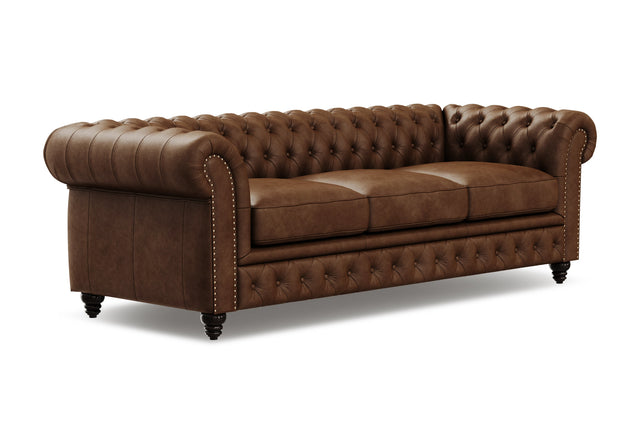
Button-tufted backs, rolled arms, and nailhead detailing define the traditional leather sofa. These designs suit formal living rooms, studies, and spaces with classic or heritage-influenced aesthetics.
Modern minimalist
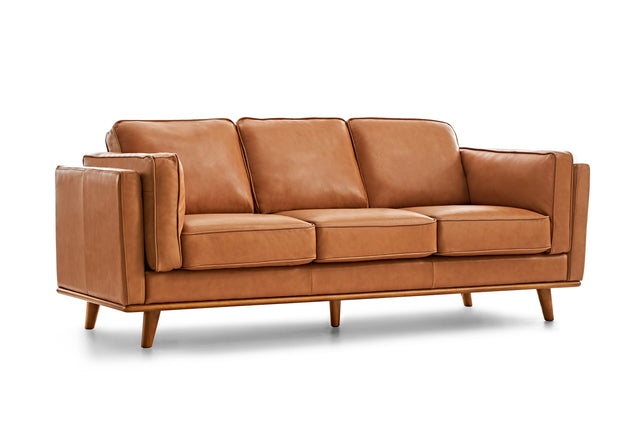
Clean straight lines, low-profile silhouettes, and minimal surface detail. These sofas integrate naturally into contemporary interiors and work best in neutral leather tones — black, tan, or cognac.
Transitional
A blend of traditional and modern — more relaxed than a formal Chesterfield but with more character than a purely minimalist piece. Transitional designs are the most versatile and suit the widest range of home styles.
Sectional configurations
L-shape and modular sectionals work well in open-plan spaces where the sofa needs to define the living zone. They offer generous seating and can be reconfigured as needs change.
4. Budget, Care, and Long-Term Maintenance
Quality leather furniture requires a higher initial investment than most fabric alternatives — but the total cost of ownership over 10–15 years is often lower when you account for durability and reduced replacement frequency.
Setting a realistic budget
• Entry-level leather furniture often uses corrected-grain or bonded leather with engineered wood frames. It is a reasonable starting point but will show wear earlier.
• Mid-range pieces typically feature top-grain leather with solid or engineered wood frames — a good value balance for most households.
• Premium options use full-grain or aniline leather with hardwood frames and quality cushioning. These are genuine long-term investments.
Routine maintenance
• Wipe down regularly with a clean, slightly damp cloth. Avoid soaking the leather.
• Condition every 6–12 months with a leather-specific product to keep the surface supple and prevent cracking.
• Keep away from direct sunlight and heat sources to prevent fading and drying.
• Address spills immediately — blot (do not rub) to prevent staining, especially on aniline leather.
Frequently Asked Questions
What is the difference between full-grain and top-grain leather?
Full-grain leather uses the outermost layer of the hide with no surface alteration, retaining natural texture and maximum strength. Top-grain leather is lightly sanded for a smoother, more uniform appearance. Both are high quality — full-grain is more durable and develops a richer patina; top-grain is easier to maintain.
How do I know if a leather sofa frame is high quality?
Look for kiln-dried hardwood frames with joints that are glued, dowelled, and screwed. Avoid frames where the only fastening is staples or adhesive alone. A good frame should feel solid without flexing or creaking when you apply pressure to the corners.
What is the best cushion fill for a leather sofa?
A foam-and-down blend offers the best balance of support and comfort. High-density foam alone provides excellent structure and resists sagging. Down-only cushions feel luxurious but require regular fluffing. The right choice depends on whether you prioritize firm support or a softer feel.
Is aniline leather a good choice for a family sofa?
Aniline leather is the softest and most natural-feeling option, but it is also the most susceptible to staining and requires more careful maintenance. For high-traffic family use, full-grain or top-grain leather is a more practical choice.
What leather color shows the least wear over time?
Darker tones — espresso, dark chocolate, and black — show less surface wear and mark accumulation than lighter shades. Mid-tones like cognac and tan are also forgiving while still providing visual warmth. Lighter colors like cream or beige are beautiful but require more maintenance attention.
How long should a quality leather sofa last?
A well-maintained full-grain or top-grain leather sofa with a solid hardwood frame can last 15–25 years in good condition. Bonded or corrected-grain leather with an engineered frame will typically show wear within 5–10 years. Regular conditioning and careful placement away from sunlight are the most important maintenance factors.
References
- Leather Truthfully: Everything You Need to Know About Leather
- BHG: Major Mistakes You're Making with Your Sofa


