

In this article: Why a leather sofa is one of the best long-term investments for your living room — covering elegance, durability, comfort, maintenance, and lasting value.
- Elegance and Versatility
- Durability That Gets Better With Age
- Comfort and Easy Maintenance
- Quality, Value, and Long-Term Ownership
- How to Style a Leather Sofa
- Frequently Asked Questions
A leather sofa stands apart from most furniture choices because it improves with age. The combination of durability, easy maintenance, timeless aesthetic, and genuine comfort means you're not replacing it in a few years — you're living with something that keeps getting better.
Quick Takeaways
• Leather adapts to its environment.
It adjusts to body temperature — warm in winter, cooler in summer — unlike many synthetic alternatives.
• High-quality leather gets better with age.
Full-grain and top-grain leather develop a patina that actually increases their visual appeal over time.
• Cleaning takes minutes, not hours.
A damp cloth handles most spills and surface dust — no professional cleaning required for routine maintenance.
• Leather is a hypoallergenic choice.
Unlike fabric, it doesn't trap dust, pet dander, or allergens — making it a practical option for allergy-sensitive households.
• Long-term value outperforms the upfront cost.
A quality leather sofa typically outlasts multiple fabric sofas, reducing total cost of ownership over time.
1. Elegance and Versatility

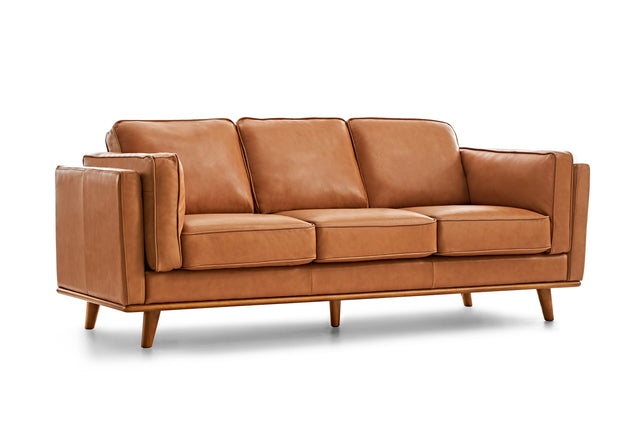
A leather sofa does something few other furniture pieces can: it works across a wide range of interior styles without requiring the room to be redesigned around it. The smooth texture and rich tones of leather complement modern minimalist spaces, traditional formal living rooms, transitional interiors, and everything in between.
The visual presence of a leather sofa makes it naturally the focal point of a room. Paired with layered textiles — cushions, throws, rugs — it anchors the space without overwhelming it. Whether the room leans warm and classic or cool and contemporary, leather adapts.
2. Durability That Gets Better With Age
One of the most practical arguments for leather is longevity. Fabric sofas show wear, pill, and fade. High-quality leather — full-grain or top-grain — does the opposite: it develops a patina that deepens its character over years of use.
• Full-grain leather retains the hide's natural surface, giving it maximum strength and a unique texture that evolves over time.
• Top-grain leather has a smoother, more refined appearance and still offers excellent durability with proper care.
• Both grades handle everyday use — including families and pets — better than most fabric alternatives at a comparable price point.
• With regular conditioning, a quality leather sofa can remain in excellent condition for a decade or more.
3. Comfort and Easy Maintenance
Leather brings a distinct comfort quality that most materials don't replicate. The surface adapts naturally to body temperature, making it inviting in winter without becoming uncomfortably warm in summer. It doesn't trap dust, pet hair, or allergens — which also makes everyday cleaning straightforward.
Day-to-day cleaning
• Most dust and surface residue clears with a dry or slightly damp cloth.
• Spills blot cleanly without soaking into the material — act quickly and blot rather than wipe.
• Leather doesn't require vacuuming or fabric-specific stain treatments for routine maintenance.
Periodic care
• Condition every 6–12 months to keep the leather supple and prevent cracking.
• Keep out of direct sunlight to avoid fading and surface deterioration over time.
4. Quality, Value, and Long-Term Ownership
A leather sofa carries a higher upfront cost than most fabric alternatives — but the comparison changes significantly over a 10-year period. Fabric sofas require more frequent replacement, professional cleaning, and often look worn well before their structural life ends.
A well-maintained leather sofa retains its appearance and structural integrity for far longer. It also holds decorative value — a quality leather piece doesn't look dated in the way that trend-driven fabric sofas often do after a few years. For households that view furniture as a long-term investment rather than a short-term purchase, leather typically represents better value over the full ownership period.

5. How to Style a Leather Sofa

The best way to make a leather sofa feel at home in any room is through layering. A few principles that work consistently:
• Add texture contrast with knit or velvet cushions — this softens the sleek surface of the leather and makes the overall look feel warmer.
• Use a throw blanket draped over one arm for an effortlessly lived-in look that also adds comfort.
• A coffee table anchors the sofa visually — wood tones work especially well with tan, cognac, and brown leathers.
• Area rugs define the seating zone and add visual warmth, particularly with darker leather tones.
• For open-plan spaces, a leather sectional can help delineate the living area from other zones without using walls or partitions.
Frequently Asked Questions
Is a leather sofa comfortable for long periods of sitting?
Yes — quality leather adapts to body temperature and provides a comfortable, supportive surface for extended sitting. Cushion construction (foam density, depth, and fill) has the biggest influence on long-term seated comfort, so evaluate those alongside the leather itself.
Does leather make a good sofa for pet owners?
High-quality leather handles pets better than most fabric options — it doesn't trap pet hair or dander, and surface cleaning is straightforward. Full-grain and top-grain leather are more scratch-resistant than bonded or corrected-grain alternatives.
How long does a quality leather sofa last?
With regular conditioning and basic care, a full-grain or top-grain leather sofa can last 15–25 years in good condition. This significantly outlasts most fabric sofas at comparable price points, making leather a strong long-term value.
Will a leather sofa fade in sunlight?
Over time, direct sunlight will cause leather to fade and dry out. Keep the sofa out of direct sun where possible, or use window treatments to reduce UV exposure. Conditioning also helps protect the surface from light damage.
Is leather sofa care difficult?
Routine care is simple — wipe down regularly with a slightly damp cloth and condition 1–2 times per year. Spills clean easily when addressed quickly. Leather doesn't require vacuuming or specialty stain treatments for everyday maintenance.
What leather sofa color works best in a smaller room?
Lighter tones like tan, cognac, or caramel tend to feel less visually heavy in smaller spaces. Neutral shades also give you more flexibility when changing other room elements like rugs, walls, or accent pieces over time.


