

In this article: A direct comparison of power and manual recliner mechanisms to help you decide which is the right choice for your home theater.
- How Each Mechanism Works
- Daily Use: What the Difference Actually Feels Like
- Who Benefits Most from a Power Mechanism
- When Manual Is the Right Choice
- Reliability: Setting the Record Straight
- Cost Comparison: What the Power Premium Buys
- Frequently Asked Questions
The choice between a power recliner and a manual recliner comes down to how often you use the chair, who uses it, and whether the mechanism will work with your body rather than against it. Both types function well in the right context — the mistake is applying the wrong one.

This article breaks down exactly how each mechanism works, what daily use looks like over hundreds of sessions, and where the cost difference is — and is not — justified.
Quick Takeaways
• Power recliners offer continuous position adjustment that manual chairs cannot match.
In a 2–4 hour session, the ability to micro-adjust without committing to a fixed position reduces end-of-session fatigue.
• Manual recliners are the better choice for secondary rooms and infrequent use.
A quality manual recliner at $600–$900 will outlast a budget power model at the same price point.
• Getting up from a manual recliner is a physical event that adds up over time.
For anyone with back pain, hip tightness, or post-surgery recovery, the motorized return to upright removes a real barrier.
• Quality power mechanisms are more reliable than their reputation suggests.
Motors in premium chairs are rated for 25,000+ cycles; the failures people associate with power recliners happen in budget models.
• Independent motor control changes what the chair can do, not just how it moves.
Separate backrest and footrest motors allow zero-gravity and leg-elevation positions that a single-lever manual cannot achieve.
1. How Each Mechanism Works

A manual recliner operates through a side-mounted lever. Pulling the lever releases a latch that allows the footrest to extend; the weight of your body leaning back then engages the recline through a linked mechanism. Most manual chairs offer two or three fixed recline positions — upright, partial recline, and full recline. To return to upright, you push the footrest down with your legs while rocking your body weight forward.
The entire sequence is mechanical and requires no power source. The position options, however, are fixed. You cannot stop at any arbitrary point between upright and fully reclined without the chair either clicking forward or backward to the next preset.
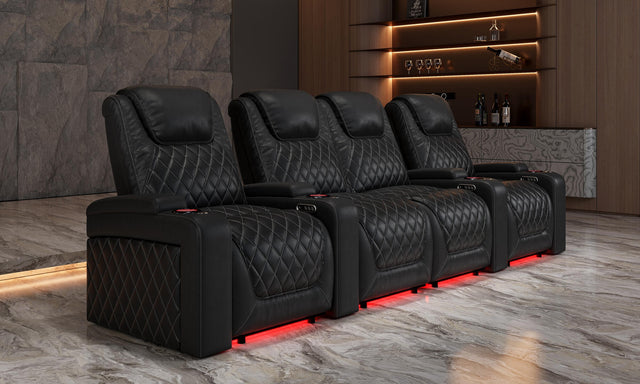
A power recliner uses an electric motor — or two separate motors in dual-motor models — controlled by a button panel on the armrest or a handheld remote. Pressing the button drives the motor through a continuous arc. The chair stops exactly where you release the button. There are no fixed positions; you can stop at any point along the full range of motion. A second press returns the chair to the previous position, or you can hold the button to move it incrementally.
The distinction that matters for a 2+ hour session is this: a manual mechanism commits you to a position until you physically change it. A power mechanism lets you make small adjustments — a few degrees forward or back — throughout the session without getting up or exerting effort.
2. Daily Use: What the Difference Actually Feels Like

Getting out of a manual recliner is a whole-body event. You lean forward to shift your centre of gravity, push the footrest down with your legs, and then rock upright. In a single session, this is unremarkable. Over hundreds of sessions a year, it is a consistent physical demand. For anyone with lower back pain, tight hip flexors, or recovering from a hip or knee procedure, that demand becomes a genuine inconvenience.
A power recliner returns to upright with a button press. The chair moves; you don't have to. The reduction in strain is especially relevant for daily users, and the compound effect over a year of use is more significant than it sounds in a single description.
Independent Motor Control
Dual-motor power recliners add a capability that no manual chair can replicate: separate control of the backrest and footrest. This means you can elevate your legs to reduce lower-limb swelling while keeping your back upright, or recline the back while leaving the footrest partially extended. The zero-gravity position — where the knees are slightly above the heart — requires independent motor control and is not achievable with a linked manual mechanism.
For users who watch long sessions, work from the chair, or deal with circulatory conditions, independent motor control changes what the chair is able to do, not just how it operates.
3. Who Benefits Most from a Power Mechanism

People with Back Issues
A power lumbar adjustment allows each user to dial in support at the exact position that fits their spine curve. A manual chair has a fixed lumbar position that either fits a given person or does not. For anyone who has experienced chronic lower back pain, the ability to fine-tune lumbar position during a long session is not a luxury — it is a functional difference.
Older Adults and Mobility Considerations
The motorized return to upright removes a physical barrier that compounds with age. Getting up from a deeply reclined manual chair requires core engagement, hip flexor flexibility, and leg strength. A power mechanism delegates that work to the motor. For older adults or anyone managing a joint condition, this is a meaningful daily quality-of-life difference.
Long-Session Viewers
Two-to-four-hour sessions are common in a dedicated home theater. Over that duration, your body wants to shift position multiple times. A manual chair forces you to fully commit to a position change each time. A power chair lets you make small corrections — move a few degrees forward when a scene requires attention, ease back slightly during slower passages — without disrupting your experience or the experience of people seated next to you.
Households Where the Chair Is Shared
Power memory positions allow two people with different body types and preferred recline angles to save their settings independently. A person who prefers 110 degrees and a person who prefers 140 degrees can each recall their position with a single button press. Manual chairs offer no equivalent — each user adjusts from whatever position the chair was left in.
4. When Manual Is the Right Choice

A guest room recliner used a few times per month does not justify a power mechanism premium. If the chair is not a daily-use piece, the ergonomic advantages of continuous adjustment are largely theoretical. A quality manual recliner is appropriate, and the money saved is real.
An active household with children and pets also makes a reasonable case for mechanical simplicity. A manual mechanism has fewer components and nothing that can fail from overuse, impact, or liquid exposure. There is no motor to burn out and no button panel to damage. When the chair is used in a high-traffic environment where conditions cannot be controlled, fewer moving parts is an advantage.
Budget is the most practical consideration. A well-made manual recliner in the $600–$900 range, from a reputable manufacturer using hardwood frames and quality foam, will outlast a poorly made power recliner at the same price. In budget power chairs, the motor is typically the weakest component. If you are not prepared to spend $1,200 or more for a power model with a quality motor, a quality manual is the better long-term value. The failure pattern in cheap power recliners is predictable: the motor degrades within three to five years, and replacement costs often exceed the value of the chair.
5. Reliability: Setting the Record Straight

The common assumption that power mechanisms are fragile is based largely on experience with budget chairs, not with quality motors. The assumption deserves a more precise examination.
Quality motors used in premium home theater seating are rated for 25,000 cycles or more. At three full recline-and-return cycles per day — a high estimate for most users — a 25,000-cycle motor would last over 22 years before reaching its rated cycle count. Safety auto-stop protection prevents motor burn-out from held-button pressure or obstruction. Battery backup systems, standard on most quality power chairs, allow the chair to return to the upright position during power outages, preventing the chair from being stranded in a reclined position.
The failure rate on a quality power mechanism over a ten-year period is comparable to the failure rate on a quality manual mechanism over the same period. The difference is in how each type fails. A manual lever mechanism typically fails through a loosened or sheared bolt — a repair that a handy homeowner can address in under an hour. A power mechanism failure requires a technician and a replacement motor assembly. Servicing is less DIY-accessible. That is a genuine consideration, not a reason to avoid power altogether.
The correct framing is: cheap power mechanisms fail; quality power mechanisms do not fail more often than quality manual mechanisms, but they are more involved to service when they do.
6. Cost Comparison: What the Power Premium Buys

The price gap between manual and power recliners reflects more than just a motor. It reflects the quality of that motor, the frame construction required to support motorized movement, the control system, and in higher tiers, additional powered features like headrest and lumbar adjustment. The table below shows where each tier sits and what it is best suited for.
| Type | Typical Price (CAD) | Best For |
|---|---|---|
| Manual | $600–$1,200 | Occasional use, guest rooms, secondary seating, buyers prioritizing mechanical simplicity |
| Power (single motor) | $1,200–$1,700 | Daily home theater use, users who want motorized return to upright without independent control |
| Power (independent motors) | $1,500–$2,200 | Zero-gravity positioning, leg elevation, long sessions, users managing circulatory or back conditions |
| Power + power headrest + power lumbar | $2,000+ | Dedicated home theater rooms, daily users, households with multiple people sharing the same chair |
The single-motor power recliner is the most common entry point for home theater buyers moving from manual. It delivers the return-to-upright convenience and continuous recline control without the cost of a dual-motor system. For most dedicated theater rooms used daily, it is the point where the power premium is clearly justified.
Frequently Asked Questions
Is a power recliner worth the extra cost for home theater use?
For a dedicated home theater used daily, yes. The combination of motorized return to upright, continuous position adjustment, and — in dual-motor models — independent footrest and backrest control produces a meaningfully different experience over long sessions. For a secondary room used occasionally, the premium is harder to justify and a quality manual recliner is the better value.
How much electricity does a power recliner use?
A typical power recliner motor draws between 20 and 50 watts during active movement. Because the motor only runs during position changes — typically a few seconds at a time — total energy consumption per day is very low, generally under 0.05 kWh. Annual electricity cost for daily use is negligible, usually under $5 CAD at standard rates.
Can a power recliner function during a power outage?
Quality power recliners include a battery backup system specifically for this scenario. During a power outage, the backup battery provides enough charge to return the chair to the upright position. It does not provide extended operation, but it prevents the chair from being stranded in a reclined position. Always confirm battery backup is included before purchasing — it is not universal across all brands.
What is the difference between single-motor and dual-motor power recliners?
A single-motor power recliner moves the back and footrest together in a linked arc — both move simultaneously when you press the button. A dual-motor recliner has separate motors for each, allowing independent control. With a dual-motor chair, you can elevate the footrest while keeping the back upright, recline the back while leaving the footrest down, or achieve zero-gravity positioning where the knees are elevated above the heart. Single-motor is appropriate for most users; dual-motor is the better choice for users with specific therapeutic or comfort needs.
Are power recliners harder to maintain than manual?
Day-to-day maintenance is the same for both types — cleaning the upholstery is the primary regular task. Where they differ is in repair. A manual mechanism that loosens or fails typically involves a bolt or latch that a handy person can fix. A power mechanism failure requires a technician and a replacement motor assembly. The failure rate on quality power mechanisms is comparable to quality manual mechanisms over ten years, but the repair process is less DIY-accessible.
What happens if the power mechanism fails?
If the motor fails, the chair remains in whatever position it was in at the time of failure. Battery backup will return it to upright if power is available. For a failed motor, a technician will typically diagnose whether the motor assembly, the wiring harness, or the control board is at fault and replace the relevant component. Most reputable brands carry replacement parts for current and recent models. This is one reason to buy from a brand with established after-sale support rather than an unbranded import.
Can I adjust only the footrest without reclining the back?
Only on a dual-motor power recliner. Single-motor power recliners and all manual recliners link the footrest and backrest movement — they operate together. If independent footrest control is important to you (for leg elevation, reducing lower-limb swelling, or zero-gravity positioning), confirm that the model you are considering has dual independent motors before purchasing.
Which is better for someone who has had back surgery?
A power recliner with independent motor control is generally better suited to post-surgical recovery and ongoing back management. The motorized return to upright eliminates the core and hip engagement required to exit a manual recliner, which can stress a healing lumbar or thoracic area. The ability to fine-tune recline angle and lumbar support to a specific position — and hold it precisely — is also more supportive than committing to a fixed position in a manual chair. Consult your physician or physiotherapist for guidance specific to your recovery protocol.


