

In this article: If you’re comparing full grain vs top grain vs bonded leather for premium seating, here’s what the terms actually mean, how each material feels and ages, and a practical checklist to judge long-term value.
- What “Leather Grade” Really Means (and What It Doesn’t)
- Full Grain Leather: Natural Character and Long-Term Aging
- Top Grain Leather: Refined Look, Consistent Feel
- Bonded Leather: Budget-Friendly, Shorter Lifespan
- Full Grain vs Top Grain vs Bonded Leather: Side-by-Side Comparison
- A Buyer’s Checklist for Premium Seating Upholstery
- Frequently Asked Questions
Full grain vs top grain vs bonded leather comes down to structure: full grain is the strongest, most natural hide layer; top grain is sanded/refined for consistency; bonded leather is mostly polyurethane and leather fibers bonded to a backing.If you want leather that develops a rich patina over years, full grain typically leads. If you prefer a smoother, more uniform look with easier day-to-day upkeep, top grain is often the practical choice. If price is the primary driver, bonded leather can look good at first—but it generally won’t age as gracefully under daily use.
Quick Takeaways
• Full grain keeps the hide’s natural surface intact.
It tends to be the most durable, and develops the most noticeable patina over time.
• Top grain is real leather with the surface refined for consistency.
It often feels smoother and looks more uniform.
• Bonded leather is a composite (leather fibers + binder on a backing).
It is typically the least durable for high-contact seating.
• For recliners and sofas.
Prioritize high-contact areas (headrest, seat, arms) and ask what material is used there specifically.
• The best choice is the one that matches your routine.
Patina lovers usually prefer full grain; uniform look seekers often choose top grain.
1. What “Leather Grade” Really Means (and What It Doesn’t)

“Leather grade” is a shorthand used in retail to describe how a hide (or a leather-like material) is processed. It can hint at durability and aging, but it isn’t a universal standard with strict rules across every manufacturer. Two “top grain” leathers can feel and perform differently depending on:
• Finish type (aniline, semi-aniline, pigmented/protected)
• Thickness and cut used on high-contact surfaces
• Tanning process and quality control
• Upholstery construction (stitching, panel design, backing materials)
A more helpful way to shop is to treat “full grain,” “top grain,” and “bonded” as a starting point, then confirm the details that affect how your seating feels every day—and how it looks after thousands of sit-downs.

2. Full Grain Leather: Natural Character and Long-Term Aging
Full grain leather is the top layer of the hide with the natural grain left intact. Because the surface hasn’t been sanded down to remove marks, it retains more of the hide’s original fiber structure—which is one reason it’s widely associated with durability and long-term wear.
How full grain feels
Full grain often feels slightly more textured and organic. You may notice natural variations—subtle wrinkles, pores, or small marks—because the surface is not “corrected” to look perfectly uniform.
How full grain ages (patina)
Full grain is prized for patina: gradual changes in tone and sheen that can make the leather look richer over time. In a home theater setting, this is most visible on the headrest, seat, and arm panels where contact and gentle friction are highest.
Best for
• Buyers who want a luxury look that evolves instead of staying perfectly uniform
• High-use seating where long-term wear matters
• Rooms where “natural character” looks intentional and elevated
Potential trade-offs
• Natural markings can be visible (this is part of the appeal for many)
• Depending on finish, some full grain leathers can show oils or color shifts more readily than heavily protected finishes

3. Top Grain Leather: Refined Look, Consistent Feel
Top grain leather is real leather, typically made by lightly sanding or buffing the surface to remove imperfections, then applying a finish. This “refining” creates a more consistent appearance and often a smoother hand-feel.
How top grain feels
Top grain commonly feels smooth and even. Many buyers prefer it for premium seating because it delivers a polished, uniform look that stays visually consistent from panel to panel.
How top grain ages
Top grain can still age beautifully, but the patina is usually subtler than full grain. The finish can help resist minor staining and everyday wear, which can be especially useful in family rooms and multi-user home theaters.
Best for
• Buyers who want a consistent, showroom-clean look
• Homes with kids, pets, or frequent entertaining where easier maintenance is a priority
• Seating designs that emphasize uniform color matching across many chairs
Potential trade-offs
• Less “natural character” than full grain
• Depending on finish quality, the feel can be slightly less breathable than minimally finished leathers

4. Bonded Leather: Budget-Friendly, Shorter Lifespan
Bonded leather is made from shredded leather fibers mixed with binders and applied to a backing, then finished with a polyurethane (PU) coating. It can look similar to leather from a distance, but it doesn’t behave like a full hide in daily use.
How bonded leather feels
Bonded leather often feels more like a coated surface—smooth and uniform, sometimes slightly “plasticky” compared to full grain or top grain. The exact feel varies by the thickness and quality of the PU top layer.
How bonded leather ages
In high-contact areas (seat, arms, headrest), bonded leather is more likely to show peeling, cracking, or flaking over time because the surface is essentially a coated composite rather than a continuous hide.
Best for
• Light-use spaces where cost is the main driver
• Shorter ownership timelines or temporary setups
Potential trade-offs
• Typically the least durable option for daily-use seating
• Repairs can be difficult to blend seamlessly once peeling begins
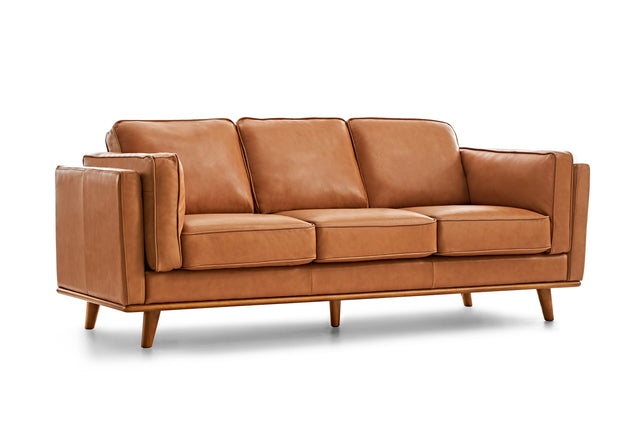
5. Full Grain vs Top Grain vs Bonded Leather: Side-by-Side Comparison
| Feature | Full Grain Leather | Top Grain Leather | Bonded Leather |
|---|---|---|---|
| What it is | Natural top hide layer with grain intact | Real leather with surface refined and finished | Leather fibers + binder on a backing with PU finish |
| Durability (typical) | Excellent for long-term use | Very good; depends on finish and thickness | Lower for high-contact seating |
| Feel | Natural, slightly textured | Smoother, more uniform | Coated, uniform surface feel |
| Aging / patina | Most visible and character-rich | Subtle, more controlled | More likely to peel/crack than patina |
| Appearance | Natural variations are normal | Consistent, “refined” look | Uniform; can mimic leather initially |
| Best use | Luxury, long ownership, high use | Premium everyday use, family-friendly | Light use, budget-driven |
6. A Buyer’s Checklist for Premium Seating Upholstery
If you’re investing in luxury recliners or a home theater sofa, the “grade” is only part of the decision. Use this checklist to compare options with confidence—especially when you’re shopping online.
1) Confirm what’s used on high-contact surfaces
Ask specifically what material is used on the seat cushions, headrest, and armrests. Some products use real leather only on certain panels and a matching synthetic on others. There’s nothing inherently wrong with that approach, but you should know what you’re buying.
2) Ask about the finish (aniline vs protected)
Finish matters as much as grade. In simple terms:
• More natural finishes can feel softer and develop patina faster, but may show marks more easily.
• More protected finishes can resist minor spills and friction better, often with a slightly more uniform look.
3) Match leather to your routine (not just your taste)
• If you want a “lived-in luxury” look that becomes uniquely yours, lean toward full grain.
• If you want a consistent look across multiple seats and easy day-to-day upkeep, top grain is often the sweet spot.
• If the room is rarely used and budget matters most, bonded leather can work—but plan for a shorter lifespan.
4) Pay attention to the feel where you actually sit
If possible, request swatches. The seat and arm feel matters more than how the back panel looks in a photo.
5) Consider long-term value, not just purchase price
A home theater is a long-term space. Upholstery that wears well can help your seating keep its refined look over years—supporting comfort, resale value, and the overall feel of the room.
If you’re browsing premium seating built for daily relaxation, explore our Wellness Series collection for designs that prioritize comfort, materials, and long-term enjoyment.

Frequently Asked Questions
Is top grain leather real leather?
Yes—top grain is genuine leather. It comes from the hide but is refined (often lightly sanded) and finished for a smoother, more consistent look.
Is full grain leather always better than top grain?
Not always—it depends on what “better” means for you. Full grain is often chosen for natural character and patina, while top grain is often chosen for a consistent look and practical everyday wear. Both can be excellent in premium seating when the hide quality and finishing are well executed.
Why does bonded leather peel?
Bonded leather can peel because the surface is typically a polyurethane coating over a bonded fiber layer. In high-contact areas, repeated flexing and friction can cause the coating to crack or separate over time.
How can I tell if a sofa is bonded leather?
The most reliable way is to check the product specification label or ask the retailer directly. Terms like “bonded leather,” “PU leather,” “leather match,” or “leather gel” can indicate a composite or coated material on some or all panels.
What leather is best for home theater recliners?
For most buyers, top grain or full grain leather is best for home theater recliners because these chairs see repeated contact on the seat, arms, and headrest. Choose full grain if you want more natural character and patina; choose top grain if you prefer a uniform look and easy everyday care.
Does full grain leather require special care?
Full grain leather typically benefits from consistent, gentle care rather than complicated routines. Keep it away from direct heat and harsh sunlight when possible, wipe dust regularly with a soft cloth, and follow the manufacturer’s guidance for approved cleaners/conditioners.


