

In this article: A calm, step-by-step fabric sofa cleaning guide that starts with fabric codes and safe spot-cleaning, then moves to deep-clean methods and drying tips to prevent odor and water rings...
- Start Here: Read the Fabric Cleaning Code (W, S, WS, X)
- What to Gather: Tools & Cleaners That Stay Fabric-Safe
- Spot Cleaning Workflow (Spills, Oil, Ink, & Pets)
- Deep Clean Methods: Steam, Extraction, or Low-Moisture
- Drying & Deodorizing: Prevent Odor and Water Rings
- Maintenance Plan: Keep Fabric Looking New Between Cleans
- When to Call a Professional (and What to Ask For)
- Frequently Asked Questions
A reliable fabric sofa cleaning guide starts with your upholstery’s cleaning code (W, S, WS, or X), then uses the gentlest method that fully removes the stain and rinses away residue. Done well, you can spot-clean most spills in minutes and deep-clean seasonally without creating water rings, lingering odor, or stiff “crunchy” fabric.
Fabric sofas can feel softer and more relaxed than leather, but they do ask for a more methodical care routine—especially if your seating is in a bright living room, a media space, or a family room where snacks, pets, and everyday life happen. This workflow is designed to protect premium upholstery while keeping the process simple, safe, and repeatable.
Quick Takeaways
• Always confirm the fabric code.
Before using water or solvent—one wrong product can set stains or damage fibers.
• Blot first, never rub.
Friction drives spills deeper and can fuzz or distort the weave.
• Use minimal moisture.
Work from the outside in to avoid spreading and water rings.
• Rinse (or wipe) away cleaner residue.
Leftover soap attracts soil and causes rapid re-soiling.
• Dry fast and evenly with airflow.
To prevent odor, mildew, and tide marks.
1. Start Here: Read the Fabric Cleaning Code (W, S, WS, X)

The most important step in any fabric sofa cleaning guide is identifying the manufacturer’s cleaning code. It’s usually found on a tag under a seat cushion, on the underside of the sofa, or in the care documentation.
| Cleaning Code | What It Means | What to Use | What to Avoid |
|---|---|---|---|
| W | Water-safe upholstery | Water-based cleaner (pH-neutral), distilled water | Solvent-only cleaners; over-wetting |
| S | Solvent-only upholstery | Dry-cleaning solvent formulated for upholstery | Water, steam, or water-based foam |
| WS (or W/S) | Water-based or solvent-based are acceptable | Start with mild water-based; use solvent for oily stains if needed | High-alkaline cleaners; heavy saturation |
| X | Vacuum only | Vacuum with upholstery brush; professional cleaning | Any cleaner (water or solvent), steam, DIY extraction |
Do a hidden test every time, even if you’ve cleaned before. Fabrics can vary by dye lot, finish, and wear patterns. Test behind a cushion or on the back hem: apply your chosen method, let it dry fully, then check for color transfer, rings, stiffness, or distortion.

2. What to Gather: Tools & Cleaners That Stay Fabric-Safe
Having the right tools helps you clean more gently (which is almost always the best approach for premium upholstery).
Basic kit (works for most W or WS fabrics)
• White, lint-free cloths or microfiber towels (white reduces dye transfer risk)
• Soft upholstery brush (natural or very soft synthetic bristles)
• Vacuum with upholstery attachment and crevice tool
• Distilled water (reduces mineral deposits that can contribute to rings)
• pH-neutral upholstery cleaner (or a mild, fabric-safe detergent solution)
• Spray bottle for controlled misting (not soaking)
• Fan for fast drying
For S-code fabrics (solvent-only)
• Upholstery dry-cleaning solvent (labeled for “S” fabrics)
• Good ventilation and a low-lint cloth
What not to use (common causes of damage)
• Bleach (unless the manufacturer explicitly allows it)
• High-alkaline or “heavy-duty” cleaners (can weaken fibers and affect dyes)
• Dish soap in strong concentration (often leaves sticky residue)
• Colored towels that can transfer dye when wet
• Too much water, especially on textured weaves, chenille, and performance finishes

3. Spot Cleaning Workflow (Spills, Oil, Ink, & Pets)
Spot cleaning is where most fabric sofas are won or lost. The goal is to remove the spill and the cleaner, then dry evenly—without scrubbing the fibers.
Step 1: Remove loose debris and blot immediately
• If there are crumbs or grit, vacuum first so you don’t grind particles into the fabric.
• For wet spills, blot with a clean cloth (press and lift). Do not rub.
• Work from outside the stain toward the center to prevent spread.
Step 2: Match the stain type to the safest approach
Use your fabric code to choose water-based (W), solvent (S), or either (WS). Then use the lightest effective method below.
| Stain Type | Best First Move | Next Step (If Needed) |
|---|---|---|
| Water-based (coffee, juice, soda, mud) | Blot + light mist of distilled water, blot again | Small amount of pH-neutral upholstery cleaner, then wipe/rinse and dry |
| Oily (pizza, lotion, body oils) | Blot; apply a tiny amount of solvent (S/WS only) | Repeat with fresh cloth; finish with minimal water wipe only if code allows |
| Protein (milk, vomit, blood) | Blot; use cool water (W/WS) to avoid setting | Gentle upholstery cleaner; rinse wipe; dry quickly |
| Pet accidents | Blot thoroughly; cool water wipe (W/WS) | Enzyme cleaner if fabric-safe and code allows; ensure full drying to prevent odor |
| Ink/marker | Solvent approach (S/WS) with careful dabbing | Professional help if spreading or dye is lifting |
Step 3: Apply cleaner to the cloth (not directly to the sofa)
To control moisture and avoid rings, lightly dampen your cloth with the cleaning solution and dab the spot. If you must spray, use a fine mist and keep it localized.
Step 4: Remove residue (this is the step most people skip)
Many “cleaning fails” are actually residue problems. After the stain lifts, wipe the area with a cloth lightly dampened with distilled water (W/WS only) to pick up leftover cleaner. Then blot dry.
Step 5: Dry evenly to prevent water rings
• Blot with a dry towel until it feels only slightly damp.
• Point a fan across (not directly into) the cleaned area for even evaporation.
• Fluff the fibers gently with a soft brush once dry.

4. Deep Clean Methods: Steam, Extraction, or Low-Moisture
Deep cleaning is best for overall dinginess, body oil buildup on arms/headrests, and “shadow” marks that spot cleaning can’t fully correct. The right method depends on your fabric code and how quickly you can dry the sofa.
Before any deep clean: vacuum thoroughly
Vacuum seat seams, under cushions, and along the back. This removes grit that can turn into muddy streaks once moisture is introduced.
Option 1: Low-moisture upholstery shampoo (best for many W/WS fabrics)
This method uses a light foam or minimal solution, agitation with a soft brush, and careful towel extraction.
• Apply a small amount of upholstery cleaner per label directions.
• Gently brush in one direction (avoid aggressive scrubbing).
• Wipe away with clean, damp cloths (distilled water).
• Blot dry and run fans until fully dry.
Option 2: Upholstery extraction (rinse and recover)
A dedicated upholstery extractor can be effective because it both applies solution and removes it. The risk is over-wetting—especially on thick cushions and tight weaves.
• Use warm (not hot) water for W/WS fabrics unless the manufacturer says otherwise.
• Do multiple dry passes to pull out as much moisture as possible.
• Keep solution mild; too much detergent creates residue and re-soiling.
Option 3: Steam cleaning (only when code and fabric allow)
Steam can refresh and sanitize surfaces, but it can also set certain stains, distort some synthetics, and introduce too much moisture into cushions.
• Only steam if your upholstery is confirmed W or WS and passes a spot test.
• Use the lowest effective steam setting and keep the head moving.
• Follow immediately with towel blotting and strong airflow.
What to do with “X” code upholstery
If your tag says X, treat the sofa as vacuum-only. Deep cleaning should be handled by a professional who can evaluate the fabric and choose a controlled method (often dry-clean processes). Trying to “just use a little water” is where rings, shrinkage, and dye bleeding happen.
5. Drying & Deodorizing: Prevent Odor and Water Rings
Drying is not an afterthought—it’s part of the cleaning method. Most odor issues come from moisture trapped in cushion cores or along seams.
How to dry a fabric sofa faster (and more safely)
• Airflow first: use a fan to move air across the surface for several hours.
• Lift cushions and stand them on edge if possible to expose more surface area.
• Keep humidity low: run a dehumidifier or air conditioning if needed.
• Avoid heat blasting: high heat can affect some fibers and finishes; choose gentle, consistent airflow.
Preventing water rings (“tide marks”)
• Use distilled water and minimal moisture.
• Feather your cleaning slightly beyond the stain edge so there’s no hard boundary.
• Dry evenly with airflow; don’t let one edge stay wet longer than the center.
Deodorizing without heavy fragrance
If your sofa smells musty after cleaning, it often needs more drying, not more deodorizer. Once fully dry, you can lightly sprinkle baking soda on W/WS fabrics, let it sit 15–30 minutes, and vacuum thoroughly. For persistent pet odor, use an enzyme cleaner only if your cleaning code allows it and you’ve spot tested for colorfastness.
6. Maintenance Plan: Keep Fabric Looking New Between Cleans
Routine maintenance keeps you from needing aggressive deep cleans later.
Weekly (5–10 minutes)
• Vacuum cushions, arms, and seams with the upholstery tool.
• Flip or rotate reversible cushions if your sofa is designed for it.
Monthly
• Spot-clean fresh marks promptly using the code-matched method.
• Brush high-touch areas lightly to lift crushed pile (common on chenille and velvet-like textures).
Seasonally (every 6–12 months)
• Deep clean using low-moisture shampoo or extraction (W/WS only), then dry thoroughly.
• Address “traffic” discoloration on arms and headrest areas before it becomes permanent.
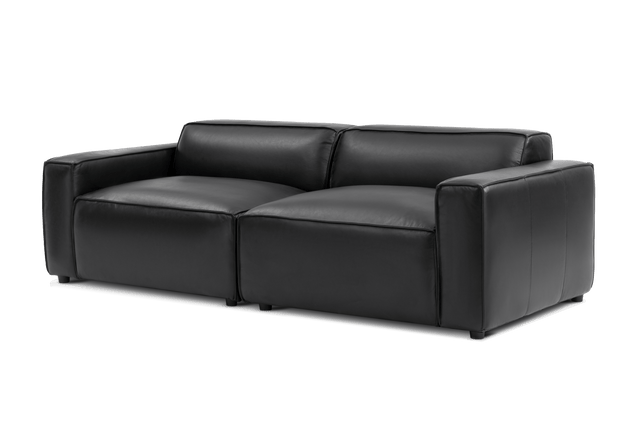
If you’re comparing upholstery types for a home theater or lounge space, fabric care is manageable when the cleaning code and workflow are clear. For those exploring premium seating, you can browse Valencia’s Wellness Series collection to see comfort-forward designs that complement an at-home reset routine.
7. When to Call a Professional (and What to Ask For)
Professional help is a smart choice when the fabric code is X, when cushions have deep saturation, or when stains are large and older.
Call a pro if:
• The tag says X, or the tag is missing and the fabric is delicate/unknown.
• The stain is large (wine, coffee, pet urine) and has soaked into the cushion core.
• You see color bleeding, distortion, or recurring rings after drying.
• Odor persists after a full dry cycle (24–48 hours with airflow/dehumidification).
What to ask a cleaner (quick checklist)
• “Will you follow the manufacturer’s W/S/WS/X code and do a spot test first?”
• “Do you use a low-residue rinse to prevent rapid re-soiling?”
• “How will you control moisture so cushions dry the same day?”
• “Do you have experience with performance fabrics, chenille, or textured weaves?”
Frequently Asked Questions
How often should I deep clean a fabric sofa?
Most households do well with deep cleaning every 6–12 months, with prompt spot cleaning in between. If you have pets, kids, or a high-use media room, a lighter deep clean every 3–6 months can help keep oils and soil from building up.
Can I use a carpet cleaner on my fabric couch?
You can use an upholstery-safe extractor attachment on W or WS code fabric, but avoid carpet-only detergents and heavy saturation. Upholstery typically needs less solution and more dry passes to prevent residue and slow drying.
Why does my couch look worse after I clean it?
The most common reasons are leftover soap residue (which attracts dirt), uneven moisture that dries into water rings, or scrubbing that disturbs the fabric nap. Using minimal cleaner, wiping/rinsing residue, and drying evenly usually resolves the issue.
What’s the safest DIY cleaner for a W-code sofa?
A pH-neutral upholstery cleaner used sparingly is typically the safest. If you mix your own, keep it mild and prioritize thorough residue removal with a distilled-water wipe. Always spot test first and avoid strong soaps that leave a sticky finish.
How do I get rid of odor after cleaning upholstery?
Odor usually means moisture is still trapped in the cushions or seams. Increase airflow, reduce humidity, and allow a full dry cycle. Once dry, baking soda (vacuumed out thoroughly) can help on many W/WS fabrics; for pet odors, use an enzyme product only if the fabric code allows it.
Can I steam clean a fabric sofa?
You can steam clean some W or WS fabrics, but it’s not universal. Steam introduces heat and moisture that can set certain stains or distort fibers, so always spot test and use the lowest effective setting with immediate drying.


