

In this article: A technical explanation of German-engineered recliner mechanisms — covering how linear actuator motors work, what precision linkage construction delivers, why noise levels differ between mechanism grades, how cycle ratings translate to real-world longevity, and what this means for your Valencia seating purchase.
- What "German-Engineered" Means for a Recliner Mechanism
- Linear Actuator Motors: The Core of Power Recline
- Frame and Linkage Construction
- Noise Levels and Motion Smoothness
- Cycle Ratings and Long-Term Durability
- What German Mechanism Quality Means for Valencia Seating
- Frequently Asked Questions
The mechanism inside a power recliner is the part most buyers never see — and the part responsible for most of the differences between a seat that feels precise and whisper-quiet after ten years and one that develops rattle and resistance within two. German-engineered linear actuator mechanisms set a measurable standard in motor torque, gear precision, noise output, and cycle life that separates them from cheaper alternatives. This guide explains what those differences are and why they matter for a home theater seat used multiple times per week.

Power recline mechanisms are not interchangeable commodities. The engineering behind the motor, gear train, linkage geometry, and frame attachment points determines how the seat moves, how quietly it moves, how precisely it holds position, and how many thousands of recline cycles it will complete before degrading. These are measurable specifications — not marketing language.
Quick Takeaways
• German-engineered means precisely specified, not just geographically sourced.
German mechanism engineering applies DIN standards for load testing, noise output, and gear tolerances. The standard is what matters — it produces consistent, verifiable performance across the production run rather than variable quality typical of lower-specification mechanisms.
• Linear actuators convert rotary motor motion into precise linear travel — this is the key movement mechanism.
The actuator rod extends and retracts as the motor turns, pushing and pulling the seat's linkage through its recline arc. German actuators specify this travel in millimetres of precision and Newtons of force, not approximations.
• Gear precision determines how quietly and smoothly the seat moves.
Loosely toleranced gears produce audible whine under load. German worm-gear mechanisms achieve sub-40dB operation under rated load — quieter than background conversation in a room.
• Cycle ratings tell you actual longevity, not projected longevity.
A mechanism rated to 25,000+ full recline cycles at rated load will last over 34 years at two full reclines per day. This is the specification class that German industrial motor suppliers test to and certify against.
• The mechanism quality determines the seating experience for the entire life of the seat.
Upholstery can be conditioned and maintained. Foam recovers with rest. A degraded mechanism cannot be tuned back to specification — it requires replacement. Starting with a high-specification German mechanism protects the long-term investment.
1. What "German-Engineered" Means for a Recliner Mechanism

German engineering in the context of furniture mechanisms refers to a specific set of industrial manufacturing standards applied to the design and production of the mechanical drive systems used in power recliners. The relevant standards are primarily DIN (Deutsches Institut für Normung — the German Institute for Standardization) standards for electric motors, gear assemblies, and load-bearing mechanical components.
What DIN Standards Specify
For recliner mechanisms, DIN-aligned specifications cover three critical areas:
• Gear tolerances: the allowable dimensional variation in gear teeth. Tighter tolerances produce quieter operation, more efficient power transmission, and longer gear life. DIN quality classes for gears range from 1 (highest precision) to 12 (lowest); furniture mechanism gears from German suppliers typically operate in the DIN 5–7 range — the same class used in light industrial equipment.
• Load ratings: the continuous and peak force the mechanism can transmit without deformation. A properly rated German mechanism specifies both the static load (weight held in position) and the dynamic load (force during movement), at both ends of the recline arc.
• Cycle life testing: the number of full operating cycles completed under rated load before the mechanism degrades below performance specification. German suppliers test to a defined protocol and certify the result — not an estimated service life, but a tested one.
The Contrast with Lower-Specification Alternatives
Mechanisms produced without DIN-class standards rely on design approximations rather than tested tolerances. The practical results: audible gear noise within the first year of use, variable positional accuracy (the seat does not reliably stop at the same position each cycle), and reduced load capacity that manifests as slower operation or stalling when the occupant's weight is toward the upper end of the rated range. German mechanisms eliminate these variables by specifying them out of the design.
2. Linear Actuator Motors: The Core of Power Recline

A linear actuator is the drive component that converts the rotary output of an electric motor into linear (straight-line) movement. In a power recliner, one or two linear actuators extend and retract to push and pull the seat's mechanical linkage through its recline and footrest positions. The quality of this actuator — its motor, worm gear, and drive rod — determines the fundamental performance of the seat's power functions.
Motor Specifications That Matter
• Torque output: measured in Newton-metres (Nm). A higher torque rating means the motor can move heavier occupants through the full recline arc without speed reduction or stalling. German mechanism suppliers for home theater applications typically specify 20–35 Nm continuous torque, sufficient for occupants up to 250+ lbs at full recline without the motor slowing.
• Speed: measured in mm/sec of actuator rod travel. Most home theater applications use 4–8 mm/sec — fast enough that recline takes 15–25 seconds (not slow or frustrating) but slow enough that the movement feels controlled and premium rather than abrupt.
• Thermal protection: German motors for furniture applications include thermal cutoff protection that prevents the motor from overheating during extended continuous operation. This protection is absent in lower-specification mechanisms and is the primary cause of motor burnout in cheap power recliners.
• Back-drive resistance: the worm gear configuration in most German linear actuators provides inherent back-drive resistance — meaning the seat holds its position under load without the motor energised. The seat stays where you put it without mechanical drift.
Dual-Motor vs. Single-Motor Configurations
Premium theater seats use two independent linear actuators: one controlling the backrest recline, one controlling the footrest extension. Independent motors allow the backrest and footrest to be adjusted separately — the occupant can recline the back fully while keeping the footrest partially raised, or any combination in between. Single-motor configurations that move both backrest and footrest on a fixed arc are a common cost-reduction approach; they work but eliminate independent positional control.
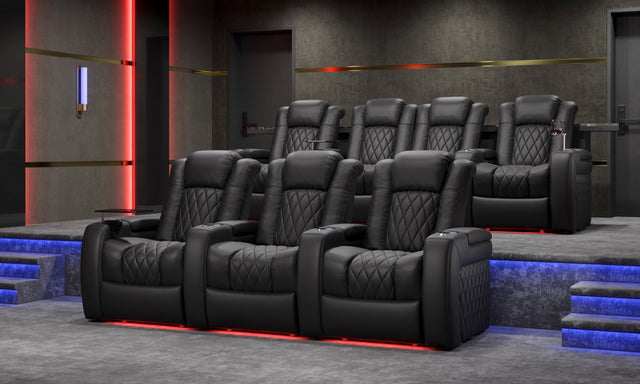
3. Frame and Linkage Construction

The linear actuator drives a mechanical linkage — a system of connected levers and pivots that translate the actuator's linear motion into the complex rotational movements of the backrest and footrest. The quality of this linkage directly affects how smoothly the seat moves, how evenly the load is distributed, and how the mechanism performs after years of repeated use.
Steel Gauge and Fabrication
Linkage components in German-engineered mechanisms are cold-rolled steel, typically 2–3 mm gauge for primary load-bearing members. Cold rolling increases the steel's yield strength by work-hardening the material during forming — the same gauge cold-rolled steel is significantly stronger than hot-rolled material. All pivot points use precision-drilled mounting holes with steel bushings or sealed bearings at high-wear pivot locations.
Pivot Tolerances and Joint Quality
Pivot joints in a recliner mechanism undergo thousands of articulation cycles over the seat's life. Loose pivot tolerances produce the characteristic rattling and clicking that develops in lower-quality mechanisms as the joints wear. German mechanisms specify pivot pin-to-bushing clearances in tenths of a millimetre — tight enough that there is no perceptible play at any joint, even after significant use. This precision is what produces the solid, creak-free feel when the seat is occupied in a partially reclined position.
Frame Attachment Engineering
The mechanism must be rigidly attached to the seat's structural frame. German mechanism designs use welded steel mounting brackets rather than bolted plates on the mechanism side. Welded brackets eliminate the joint as a potential failure point; bolted plates can loosen over cycles. On the seat side, the mounting interface uses load-distributed attachment points rather than concentrated single-bolt mounts, spreading the actuator load across the seat's frame structure.
4. Noise Levels and Motion Smoothness

Noise is the most immediately perceptible quality indicator for a power recliner mechanism. Recline noise in a quiet theater room — during a pause in dialogue, during a silent scene — is distracting and signals low mechanism quality. German mechanisms achieve sub-40 dB operation under rated load, measured at one metre from the seat. For context:
• 30 dB: very quiet room at night.
• 40 dB: library, quiet office.
• 50 dB: normal conversation at 1 metre.
• 60+ dB: typical noise level of a cheap mechanism under load.
The difference between 40 dB and 60 dB is a factor of 100 in acoustic power — not a marginal difference, but an entirely different category of operation.
Sources of Mechanism Noise
• Gear mesh noise: gear teeth engaging and disengaging under load. Reduced by tighter gear tolerances and precision surface finishing on tooth profiles.
• Bearing noise: radial loads on motor shaft bearings producing whine at motor frequency. Reduced by sealed precision bearings rather than sleeve bushings at shaft locations.
• Linkage rattle: loose pivot joints oscillating under load. Eliminated by precision pivot tolerances.
• Frame vibration: mechanism vibration transmitted through the seat structure. Reduced by isolation mounts between the mechanism chassis and seat frame in German designs.
Motion Smoothness
Smooth motion requires consistent actuator speed through the full travel range. Cheaper mechanisms exhibit speed variation — the seat moves faster in the middle of the arc and slows at the ends due to increasing torque demand and inconsistent gear mesh. German actuators maintain within ±10% speed variation across the full travel range, producing the even, continuous movement that feels premium under use.
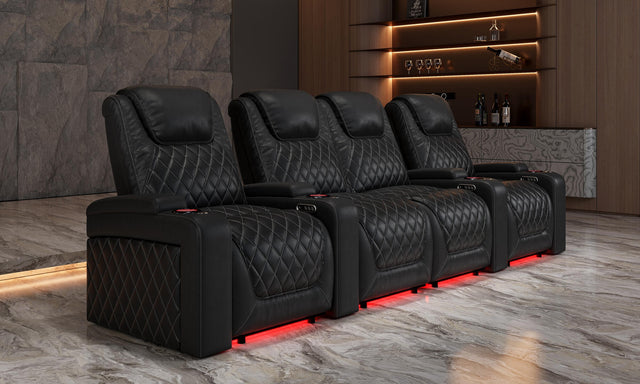
5. Cycle Ratings and Long-Term Durability

Cycle ratings are the most objective measure of mechanism longevity. A cycle rating is the number of complete full-travel operations (upright to fully reclined and back) that the mechanism will complete under rated load before degrading below a defined performance threshold — typically defined as a 20% reduction in speed or a 10 dB increase in noise level.
What the Numbers Mean in Practice
• 10,000 cycles: approximately 14 years at two full recline cycles per day. Minimum acceptable for a quality theater seat.
• 25,000 cycles: approximately 34 years at two full recline cycles per day. The standard for German mechanism suppliers in premium furniture applications.
• 50,000 cycles: the specification class used in commercial cinema and accessibility seating applications — extremely conservative for residential use.
Most home theater seat owners recline fully perhaps once or twice per viewing session — 3–5 sessions per week on average. At this usage rate, a 25,000-cycle mechanism will outlast any realistic ownership period.
Load Ratings and the Weight Factor
Cycle ratings are specified at a defined load — typically the mechanism's rated occupant weight capacity. A mechanism rated at 25,000 cycles at 150 kg (330 lbs) will achieve significantly higher cycle counts at lower occupant weights. Conversely, operating above the rated load reduces cycle life and is the most common cause of premature mechanism failure in any class of product. Confirming that your mechanism's weight rating exceeds your actual use case is the single most important specification check before purchasing.
Maintenance and Cycle Life Preservation
German mechanisms are sealed or lubricated-for-life at the factory — no user maintenance of the mechanism internals is required or recommended. What does affect cycle life: operating the mechanism against physical obstruction (furniture, walls, or objects blocking full travel), repeated partial cycles at speed rather than full-travel cycles, and moisture ingress in high-humidity basement installations without adequate dehumidification. None of these represent failure of the mechanism; they represent use outside the rated operating conditions.
6. What German Mechanism Quality Means for Valencia Seating

Valencia's power recline theater seats use German-engineered linear actuator mechanisms across the product lineup. The practical implications for buyers are straightforward and measurable.
Silent Operation in the Theater Environment
Sub-40 dB operation means adjusting your recline position during a film does not produce audible noise in the room. This is a genuine differentiator from lower-specification mechanisms. In a room where you have invested in acoustic treatment, a premium display, and calibrated audio, a mechanism that produces 60 dB of gear noise during adjustment undermines the entire experience. German mechanisms eliminate this problem at the source.
Independent Positional Control
Dual-motor German mechanisms in the Valencia lineup allow independent backrest and footrest positioning. This means you can recline to your preferred backrest angle without changing the footrest position, or raise the footrest to reduce lower leg pressure without affecting the backrest recline. This level of independent control requires two precision mechanisms operating in sync — it is not achievable with single-motor fixed-arc designs.
Long-Term Investment Protection
A theater seat is a multi-year, often decade-long purchase for most buyers. The mechanism quality determines whether that seat still feels precise and quiet in year eight or has developed the rattle, resistance, and noise of a degraded lower-quality system. With a 25,000+ cycle-rated German mechanism, the answer is straightforward: used at normal home theater frequency, the mechanism will still be operating within specification for the full realistic ownership period. This is the engineering case for investing in mechanism quality — it protects the total value of the seating investment.
Frequently Asked Questions
What is a German-engineered recliner mechanism?
A German-engineered recliner mechanism is the power drive system — motor, gears, actuator rod, and linkage — built to DIN (German Institute for Standardization) tolerances for gear precision, load rating, and cycle life. The practical characteristics are quieter operation (sub-40 dB under load), more precise positional control, higher load ratings, and tested cycle life measured in tens of thousands of full recline operations. It is the engineering standard that separates premium power recliners from lower-specification alternatives in the same price-tier appearance category.
How long does a German-engineered recliner mechanism last?
German mechanisms for premium furniture applications are rated to 25,000+ full recline cycles at rated occupant load. At two full recline cycles per day — above average home theater use — this equals approximately 34 years of operation within specification. At typical home theater use (3–5 sessions per week, one recline cycle per session), the mechanism will comfortably outlast any realistic ownership period. Cycle life is reduced by operating above the rated weight limit or against physical obstructions that prevent full travel.
Why does my power recliner make noise when reclining?
Recline noise originates from one of four sources: gear mesh noise from imprecise gear tolerances, bearing noise from lower-specification motor shaft bearings, linkage rattle from loose pivot joints, or frame vibration from mechanism vibration transmitted through the seat structure. All four are addressed by German mechanism design — tighter gear tolerances, sealed precision bearings, close-tolerance pivot joints, and isolation mounts between the mechanism chassis and seat frame. A mechanism producing audible noise under light load is typically a lower-specification mechanism rather than a failing one; the noise reflects the design's tolerance class, not a defect that will worsen suddenly.
What is a linear actuator in a recliner?
A linear actuator converts rotary motor motion into straight-line (linear) movement. In a power recliner, the actuator rod extends as the motor turns in one direction, pushing the seat linkage toward fully reclined; the rod retracts when the motor reverses, returning the seat to upright. The worm gear arrangement inside the actuator provides both the mechanical advantage to move the seat under load and inherent back-drive resistance that holds the seat in position without continuous motor power. Premium theater seats use two separate linear actuators — one for the backrest, one for the footrest — allowing independent adjustment of each position.
Can a recliner mechanism be repaired or replaced if it fails?
Yes. Linear actuator mechanisms are discrete units attached to the seat frame at defined mounting points. A failed actuator can be disconnected and replaced with a matching unit without disassembling the entire seat. The process is straightforward for experienced technicians and most manufacturers can supply replacement actuator units. This is different from the seat's upholstery or foam, which are more complex to replace. The repairability of the mechanism is one advantage of the modular German actuator design — the rest of the seat (frame, upholstery, foam, electronics) does not need to be replaced if only the actuator fails.
Does a heavier person affect how the recliner mechanism performs?
Yes — occupant weight directly affects mechanism performance and cycle life. A mechanism operating at its rated load limit moves more slowly (the motor is at full torque output), produces more heat, and accumulates wear faster than one operating at 60–70% of its rated capacity. German mechanisms specify their ratings clearly and are tested at those ratings. If you are near the upper end of a mechanism's rated weight range, the mechanism is still within specification — it will simply operate closer to its performance margins. If you regularly exceed the rated weight, speed reduction and accelerated wear are predictable outcomes. Confirming the rated capacity against actual use is the most important specification check for heavier users.
What is the difference between a single-motor and dual-motor recliner?
A single-motor recliner uses one linear actuator that moves both the backrest and footrest on a fixed arc — reclining the back automatically raises the footrest by a defined ratio. A dual-motor recliner uses two independent actuators, one for the backrest and one for the footrest, allowing each to be adjusted separately. Dual-motor configurations allow you to recline the backrest fully while keeping the footrest lowered, or raise the footrest without reclining the back — useful for reading, sleeping, or watching without leg elevation. Premium theater seating uses dual-motor configurations; single-motor designs are a cost reduction typically found in lower-priced power recliners.
Do German recliner mechanisms require maintenance?
No user maintenance of the mechanism internals is required or recommended. German linear actuators are sealed units lubricated at the factory for their rated service life. There are no user-accessible grease points, no oil changes, and no periodic servicing needed. The mechanism is designed to operate maintenance-free for its full rated cycle life. What users should avoid: blocking the mechanism's full travel range (do not position the seat against a wall that prevents full footrest extension), and do not force the mechanism to retract or extend against physical resistance. These are the only use patterns that shorten mechanism life.


