

Valencia Theater Seating — Luxury Home Theater Recliners
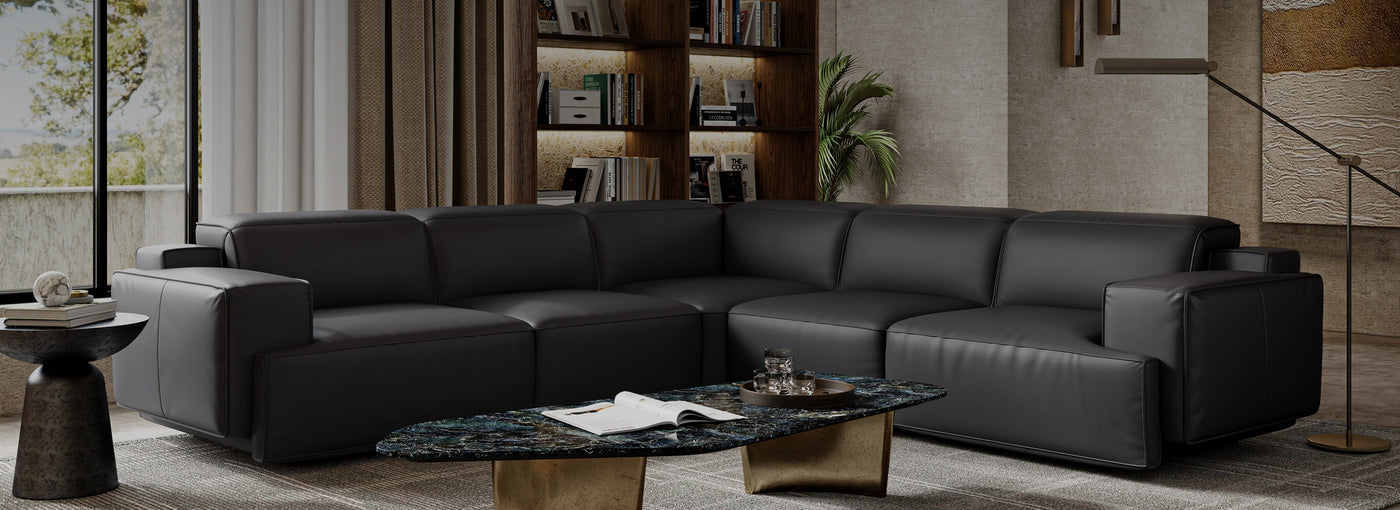
Why Choose a Leather Couch?
Leather couches offer a blend of luxury and practicality, making them a popular choice for modern living rooms. Their durability, timeless appeal, and ease of maintenance make them a worthwhile investment for any home.
- Durable + long-lasting
Crafted with premium leather, this sofa resists daily wear, tears, and fading—standing up to kids, guests, and regular use. It retains its shape and structural integrity for years, embodying Valencia’s commitment to long-lasting quality. - Pet-resistant options
Our pet-friendly leather repels fur, resists claw marks, and wipes clean of spills—perfect for furry companions. It balances durability with softness, so you don’t sacrifice comfort for pet-proof practicality. - Ages with a natural patina
Over time, the leather develops a rich, unique patina that deepens its color and adds character. It softens gently with use, transforming into a timeless, personalized piece that evolves with your home. - Easy to maintain
A quick wipe with a damp cloth removes dust and spills—no harsh chemicals needed. Occasional conditioning preserves its suppleness, making luxury upkeep effortless for busy lifestyles. - Luxury texture & feel
Sink into buttery-soft, smooth leather that feels indulgently comfortable with every touch. Its natural breathability enhances relaxation, while its refined finish elevates any room’s sophistication.
Shop Our Best-Selling Leather Couches
-


 Free White Glove Delivery
 -


 Free White Glove Delivery
 -
 Free White Glove Delivery
 -


 Free White Glove Delivery


How to Choose the Right Leather Couch
| Leather Type | Feel | Durability | Breathability | Appearance |
|---|---|---|---|---|
| Top-Grain Leather | Smooth & soft | High | Good | Classic, natural grain |
| Nappa Leather | Buttery soft | High | Very good | Luxurious, refined |
| Performance Leather | Soft | Very high | Medium | Uniform finish |
Every Valencia leather couch is crafted using premium-grade leather designed to balance softness, durability, and everyday practicality
Best Leather Couches by Lifestyle Needs
-
Free White Glove Delivery
-
Free White Glove Delivery
-

 Free White Glove Delivery
 -


 Free White Glove Delivery


Real Customer Photos


FAQs
How long does a leather couch last?
How long does a leather couch last?
A well-maintained leather couch can last for decades, often outliving fabric alternatives. Factors like leather quality, usage, and care influence its lifespan.
Is Nappa leather good for couches?
Is Nappa leather good for couches?
Absolutely. Nappa leather is soft, breathable, and luxuriously smooth—ideal for couches. Valencia's top-grade Nappa balances comfort with durability, perfect for daily use and elevated spaces.
Which leather couch is best for pets?
Which leather couch is best for pets?
Opt for full-grain or corrected-grain leather (Valencia's pet-friendly picks). These leathers are scratch-resistant, easy to wipe clean, and resistant to pet hair/claw marks—without sacrificing luxury.
How do I clean and maintain leather furniture?
How do I clean and maintain leather furniture?
Daily: Dust with a soft cloth or vacuum gently.
Spills: Blot immediately with a damp (not wet) cloth—avoid harsh cleaners.
Monthly: Use a leather conditioner to keep it supple.
Valencia's leather is low-maintenance, designed for busy households.
Does leather stretch over time?
Does leather stretch over time?
Minor, even stretching is normal—it adapts to your body for personalized comfort. Valencia's leather is pre-treated to limit excess stretch, ensuring it retains its structure while softening naturally.
How to care for leather furniture
Caring for leather furniture is a balance between regular light maintenance and preventing damage from the elements. Because leather is a natural material (essentially a skin), it needs to breathe and stay moisturized to prevent cracking. Here is a comprehensive guide on how to care for your leather furniture.

1.Know Your Leather Type
Before you apply any products, check the manufacturer's tag. The type of leather dictates how you clean it.
- Pigmented/Protected Leather: The most common and durable type. It has a polymer coating that resists stains
- Aniline/Semi-Aniline Leather: Very soft and natural looking, but has little to no protective coating.it absorbs liquids instantly and stains easily
- Nubuck or Suede: These have a velvet-like texture. Do not use standard leather creams or water on these. They require specific brushes and sprays.
(Note: The advice below applies primarily to standard Protected/Pigmented leather. If you have Aniline or Nubuck, consult a professional).
2. Routine Maintenance (Weekly)
Regular maintenance prevents dirt from acting like an abrasive sandpaper against the finish.
- Dust it: Wipe the furniture down with a clean, dry microfiber cloth.
- Vacuum it: Use the soft brush attachment on your vacuum cleaner to remove crumbs and dust from crevices. High suction or hard plastic attachments can scratch the leather.
- Fluff cushions: If the leather cushions are removable, rotate and fluff them to prevent wrinkles from becoming permanent creases (which eventually crack).
3. Cleaning (Quarterly or As Needed)
You should give your furniture a gentle wipe - down every 3 to 6 months, or when it looks soiled.
The Solution:
- Option A (Best): A pH - balanced commercial leather cleaner.
- Option B (DIY): Mix a few drops of mild soap (like Dove or Castile soap) into a bowl of distilled water. Do not use detergents or harsh cleaners.
The Method:
- Test a spot: Always test your cleaner on a hidden area (like the back of the sofa) to ensure it doesn't pull the dye out.
- Damp, not wet: Dip a soft cloth into the solution and wring it out until it is only slightly damp. Never soak the leather.
- Wipe gently: Clean in a circular motion. Do not scrub hard.
- Dry immediately: Use a separate dry cloth to wipe away moisture. Do not let it air dry wet.
4. Conditioning (Every 6 - 12 Months)
Leather loses its natural oils over time, which leads to cracking and peeling. Conditioner acts like a moisturizer.
- Purchase a high - quality leather conditioner (avoid products with silicone or wax, which can build up over time).
- Clean the sofa first (as per step 3).
- Apply a small amount of conditioner to a cloth (not directly on the leather).
- Buff it in gently and let it absorb.
- Wipe away any excess shine with a clean dry cloth.
5. Handling Spills and Stains
Speed is everything when it comes to leather.
- Liquids: Blot—do not rub. Rubbing pushes the liquid deep into the pores. Use a dry, absorbent cloth to soak up the liquid.
- Grease/Oil/Butter: Do not use water. Wipe the excess off with a dry cloth. Sprinkle baking soda or cornstarch on the spot and let it sit for a few hours to draw the oil out, then brush it off.
- Ink: Ink is very difficult to remove. You can try a cotton swab dipped in rubbing alcohol, but be very careful as this can also remove the leather dye. It is often best to call a professional for ink.
6. Prevention and Placement
Where you put the furniture is just as important as how you clean it.
- Avoid Sunlight: Direct UV exposure will fade the leather dye and dry out the material, causing rapid cracking. Keep leather out of direct window light.
- Avoid Heat: Keep leather at least two feet away from radiators, heating vents, or fireplaces. Heat dries out the leather's natural moisture.
- Watch the Pets: Cat and dog claws are leather's worst enemy. Even protected leather scratches easily.
The "Never" List
To keep your furniture safe, never use the following products on leather:
- Baby wipes (they are alkaline and can strip the protective coating).
- All - purpose cleaning sprays (Windex, Lysol, bleach).
- Furniture polish or oils not made for leather.
- Shoe polish (the leather used for shoes is processed differently than furniture leather).